
Tumbling Media Manufacturer for Deburring, Polishing & Surface Finishing
Get the right ceramic, plastic, steel, porcelain media and finishing compounds matched to your parts, material, burr condition, target finish and mass finishing machine.
Choosing the wrong tumbling media can cause poor deburring, scratches, media lodging, dull surfaces, unstable results or rust after wet finishing.
At ShinyStar Machinery, we do more than supply media. We help you build a complete finishing process with the right media, compound, machine setting and testing support for your actual parts.
- Direct Manufacturer in China
- Machine + Media + Compound Solution
- Free Sample Testing Available
- Application-Based Process Recommendation
Common Surface Finishing Problems We Help Solve
Send us your part photos and finishing requirements. We can recommend the right vibratory finishing machine, tumbling media, compound, and process for your deburring, polishing, or surface cleaning needs.
Burrs and Sharp Edges After Machining
After CNC machining, stamping, drilling, or die casting, many metal parts are left with burrs and sharp edges. These burrs can affect assembly, cause safety risks, damage other components, and increase manual labor costs. Manual deburring is often slow, inconsistent, and difficult to control in mass production. A vibratory finishing machine helps remove burrs and smooth sharp edges in batches, making the finishing process more stable, efficient, and repeatable.
Inconsistent Manual Polishing Results
Manual polishing depends heavily on worker skill, time, and consistency. For batch production, this often leads to different surface results from one part to another. Some parts may be over-polished, while others still have rough edges or visible marks. A vibratory finishing machine helps manufacturers improve surface consistency by processing many parts under the same machine, media, compound, and time settings. This makes the final result more stable and easier to control.
Rough Surface After Casting, Cutting, or Forming
Die casting, laser cutting, stamping, and forging often leave parts with rough surfaces, flash, scale, or uneven edges. These surface problems can affect the final appearance, coating quality, plating result, or assembly performance. Vibratory finishing can help smooth rough surfaces, remove light flash, clean part edges, and prepare the surface for the next production step. It is especially useful for manufacturers that need better surface quality before coating, plating, packaging, or final assembly.
High Labor Cost for Deburring and Finishing
When deburring and polishing are done manually, production cost increases quickly. Workers need time to handle each part, and the result may still not be consistent. As order volume grows, manual finishing becomes a bottleneck in production. A vibratory finishing machine allows manufacturers to process many parts at the same time, reducing manual work and improving finishing efficiency. It helps factories save labor, shorten processing time, and make surface finishing easier to scale.
Scratches or Surface Damage During Finishing
Some parts, especially aluminum, brass, zinc alloy, and precision components, are easy to scratch or damage during finishing. Using the wrong media, compound, or machine setting may create new surface problems instead of solving them. A complete vibratory finishing solution should match the machine, tumbling media, compound, water ratio, and processing time to the part material and required finish. This helps reduce surface damage and achieve a more controlled finishing result.
Difficult to Choose the Right Finishing Process
Many buyers know they need deburring, polishing, or surface cleaning, but they are not sure which machine, media, compound, or process is suitable for their parts. Choosing the wrong solution can waste time, increase cost, and fail to achieve the required surface result. By reviewing your part material, size, burr condition, and target finish, we can recommend a suitable vibratory finishing machine, tumbling media, compound, and process before you make a purchase decision.
Have burrs, sharp edges, rough surfaces, or polishing problems? Send us your part photo and finishing requirement.
Custom Tumbling Media & Compound Solutions for Your Parts
As a professional tumbling media manufacturer, ShinyStar Machinery does more than supply ceramic media, plastic media, steel media or finishing compounds. We help customers build the right mass finishing process for their actual parts.
Different parts require different media shapes, cutting grades, compound formulas and processing time. A stainless steel machined part may need strong ceramic tumbling media for deburring, while an aluminum die-casting part may need lighter plastic tumbling media to reduce scratches. For polishing, cleaning, rust prevention or final brightening, the right finishing compound is just as important as the media itself.
Our team reviews your part material, size, burr condition, surface requirement, production volume and current machine type. Then we recommend a complete media and compound solution to help you achieve stable deburring, smoother edges, brighter surfaces and repeatable batch results.
Part-Based Media Selection
We do not recommend tumbling media by product name only. We select finishing media according to your part material, burr level, part shape and surface goal. This helps avoid common problems such as poor deburring, scratches, media lodging and unstable polishing results.
Ceramic, Plastic, Steel Media Options
ShinyStar Machinery supplies a wide range of mass finishing media, including ceramic tumbling media for stronger cutting, plastic tumbling media for soft metals, steel media for burnishing, porcelain media for fine polishing, and organic media for dry finishing.
Compound Matched to Your Process
The right finishing compound helps improve cleaning, polishing brightness, rust protection and process stability. We help you choose grinding compound, polishing compound, cleaning compound, rust inhibitor or polishing paste based on your material and finishing target.
Solutions for Different Machine Types
Our media and compound solutions can be matched with vibratory finishing machines, centrifugal disc machines, rotary barrel tumblers, magnetic polishers and drying systems. This allows your vibratory finishing media and compound to work better inside the actual machine process.
Lower Risk Before Bulk Order
Before you purchase bulk tumbling media or compound, we can test your parts and provide a practical process recommendation. This helps you confirm the result, reduce trial-and-error costs and make purchasing decisions with more confidence.
Stable Results for Repeat Production
For industrial customers, one successful test is not enough. We help you control media type, compound dosage, processing time and batch conditions, so your mass finishing process remains stable for repeat orders and long-term production.
Send us your part photos, material, burr condition, current finishing problem and target surface finish. Our team will recommend the right tumbling media, finishing compound and process parameters for your application.
What Are Tumbling Media and Finishing Compounds?
Tumbling media and finishing compounds are the core consumables in mass finishing. The right combination can remove burrs, smooth sharp edges, clean oil and oxidation, improve surface brightness, prevent rust, and make your finishing result more stable from batch to batch.
What Is Tumbling Media?
Tumbling media is the abrasive or polishing material used inside a vibratory finishing machine, centrifugal disc machine, barrel tumbler, or other mass finishing equipment. During the finishing process, the media moves together with the parts and contacts the surface repeatedly to remove burrs, round sharp edges, smooth machining marks, clean oxidation, or improve the final surface finish.
Different types of tumbling media create different finishing results. Ceramic tumbling media is often used for stronger deburring and edge radiusing on steel, stainless steel, titanium, castings, and machined parts. Plastic tumbling media is lighter and gentler, making it more suitable for aluminum, brass, copper, zinc alloy, plastic, and rubber parts. Steel tumbling media is commonly used for burnishing and brightening metal surfaces, while porcelain media, walnut shell, and corn cob media are often used for fine polishing, dry polishing, drying, or final brightening.
Choosing tumbling media is not only about selecting a material. Media shape, size, density, cutting grade, wear rate, and the risk of media lodging must also be considered. A wrong media choice may cause poor deburring, surface scratches, stuck media, unstable results, or unnecessary processing time.
Key Points
- Used for deburring, edge rounding, polishing, cleaning, and surface smoothing
- Available in ceramic, plastic, porcelain, steel, walnut shell, corn cob, and special shapes
- Must be selected according to part material, burr level, part geometry, machine type, and target finish
- Media size and shape affect whether the media can reach holes, slots, edges, and complex surfaces
What Is Finishing Compound?
Finishing compound is the liquid or paste used together with tumbling media, water, and finishing machines to control the mass finishing process. While tumbling media provides the mechanical action, the compound helps improve cutting stability, cleaning performance, brightness, foam control, corrosion resistance, and final surface consistency.
In wet finishing, a grinding compound can help ceramic or plastic media maintain a stable cutting effect and reduce dirty residue during deburring. A cleaning compound helps remove oil, dust, machining fluid, oxidation, and surface contamination. A polishing compound or brightening compound can improve the surface appearance of aluminum, brass, copper, stainless steel, and other metal parts. A rust inhibitor compound is often used after wet tumbling to reduce the risk of rust or water stains on iron, steel, and other corrosion-sensitive parts. For dry polishing, polishing paste can be used with walnut shell or corn cob media to achieve a smoother and brighter final finish.
Many finishing problems are not caused by the machine itself, but by the wrong media and compound combination. The same vibratory finishing media can produce very different results when matched with different compounds, water ratios, processing time, and machine settings.
Key Points
- Improves cleaning, polishing, rust prevention, foam control, and process stability
- Includes grinding compound, cleaning compound, polishing compound, rust inhibitor, foam control compound, and polishing paste
- Helps reduce surface stains, dirty residue, rust risk, and inconsistent batch results
- Must be matched with media type, part material, water level, processing time, and machine setting
Why Media and Compound Must Be Selected Together
In mass finishing, tumbling media and finishing compound should not be selected separately. Media decides the mechanical finishing action, while compound controls the chemical and process environment. Only when both are correctly matched can the process achieve stable deburring, polishing, cleaning, drying, and rust protection.
For example, if a customer wants to remove heavy burrs from stainless steel parts, ceramic tumbling media may be suitable, but the process still needs the right grinding compound to keep cutting stable and prevent dirty residue. If the customer wants to polish aluminum parts, plastic tumbling media may reduce surface damage, but a suitable polishing compound is needed to improve brightness. If the parts are processed by wet tumbling and shipped or stored afterward, a rust inhibitor or drying process may be required to avoid water stains or corrosion.
This is why ShinyStar Machinery does not simply recommend tumbling media by product name. We evaluate your part material, size, burr condition, hole structure, surface requirement, machine type, and production volume before recommending the right media, compound, processing time, and finishing process.
| Finishing Goal | Recommended Media Direction | Recommended Compound Direction | Typical Application |
|---|---|---|---|
| Heavy deburring | Ceramic tumbling media | Grinding compound | Steel, stainless steel, machined parts, cast parts |
| Light deburring | Plastic tumbling media | Mild grinding or cleaning compound | Aluminum, brass, zinc alloy, soft metals |
| Bright polishing | Steel media or porcelain media | Polishing / brightening compound | Stainless steel, copper, brass, jewelry, hardware |
| Dry polishing | Walnut shell or corn cob media | Polishing paste | Aluminum parts, jewelry, delicate components |
| Rust prevention | Depends on part material | Rust inhibitor compound | Iron, steel, wet-finished metal parts |
| Cleaning and residue removal | Ceramic or plastic media | Cleaning compound | Oily parts, machined parts, die-cast parts |
Send us your part photos, material, burr condition, current finishing problem, and target surface result. Our team will help you choose the right tumbling media, finishing compound, machine setting, and process parameters before bulk purchase.
Tumbling Media and Finishing Compound for Better Results
The finishing result is not decided by the machine alone. The right tumbling media and finishing compound are important for deburring, polishing, cleaning, rust prevention, and surface protection. We can recommend the suitable media and compound based on your part material, burr size, and required surface finish.
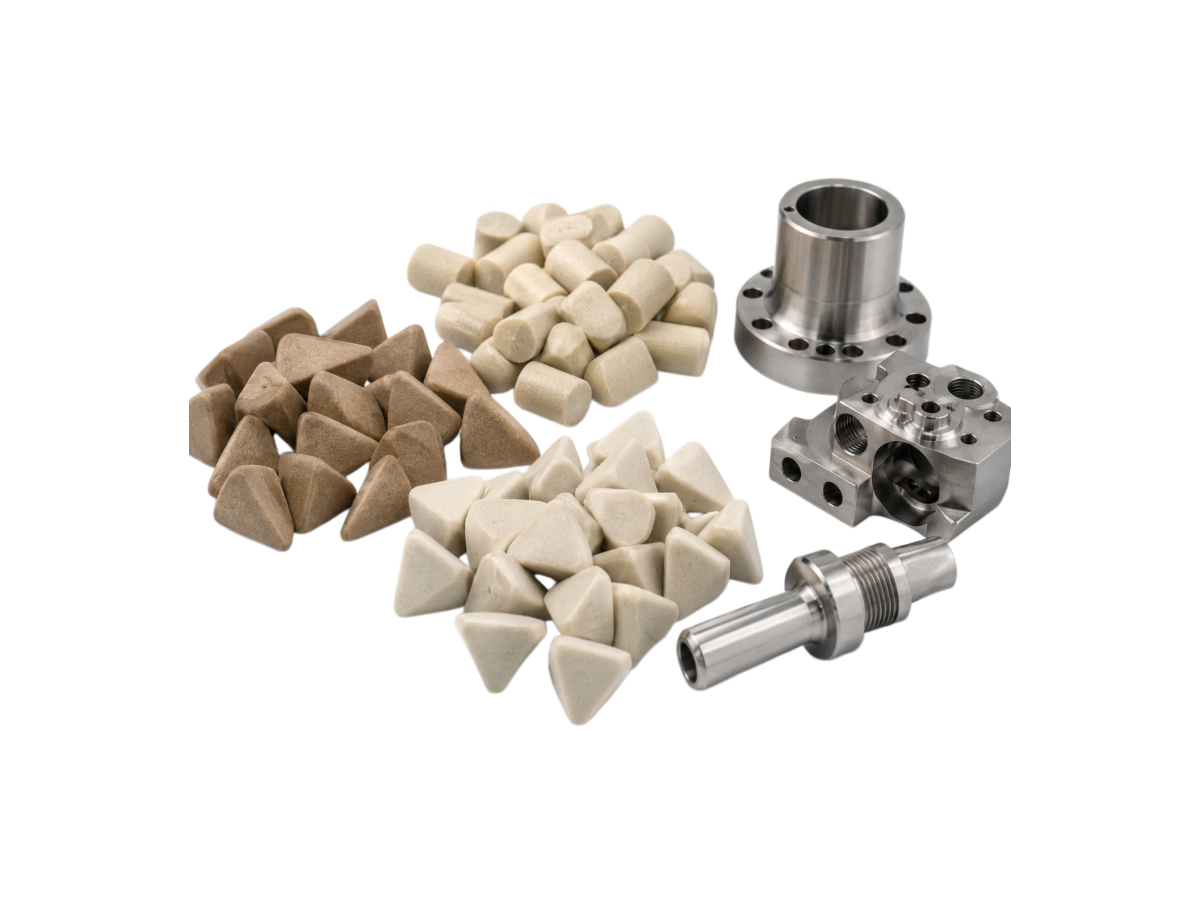
Ceramic Tumbling Media
Ceramic tumbling media is used for strong deburring, edge rounding, and surface smoothing of hard metal parts. It provides good cutting power and is suitable for rough and medium finishing processes.
Best For: Heavy deburring, edge rounding, surface smoothing, burr removal, batch finishing.
Suitable Materials: Stainless steel, carbon steel, iron, hard alloy, die casting parts, and other hard metal materials.
Suitable Parts: CNC machined parts, stamped parts, die casting parts, fasteners, hardware parts, automotive parts, and industrial metal components.
Finishing Effect: Removes burrs, rounds sharp edges, improves surface consistency, and prepares parts for coating, plating, painting, or assembly.
Recommended Use: Use with water and a suitable deburring or cleaning compound for stable wet vibratory finishing results.
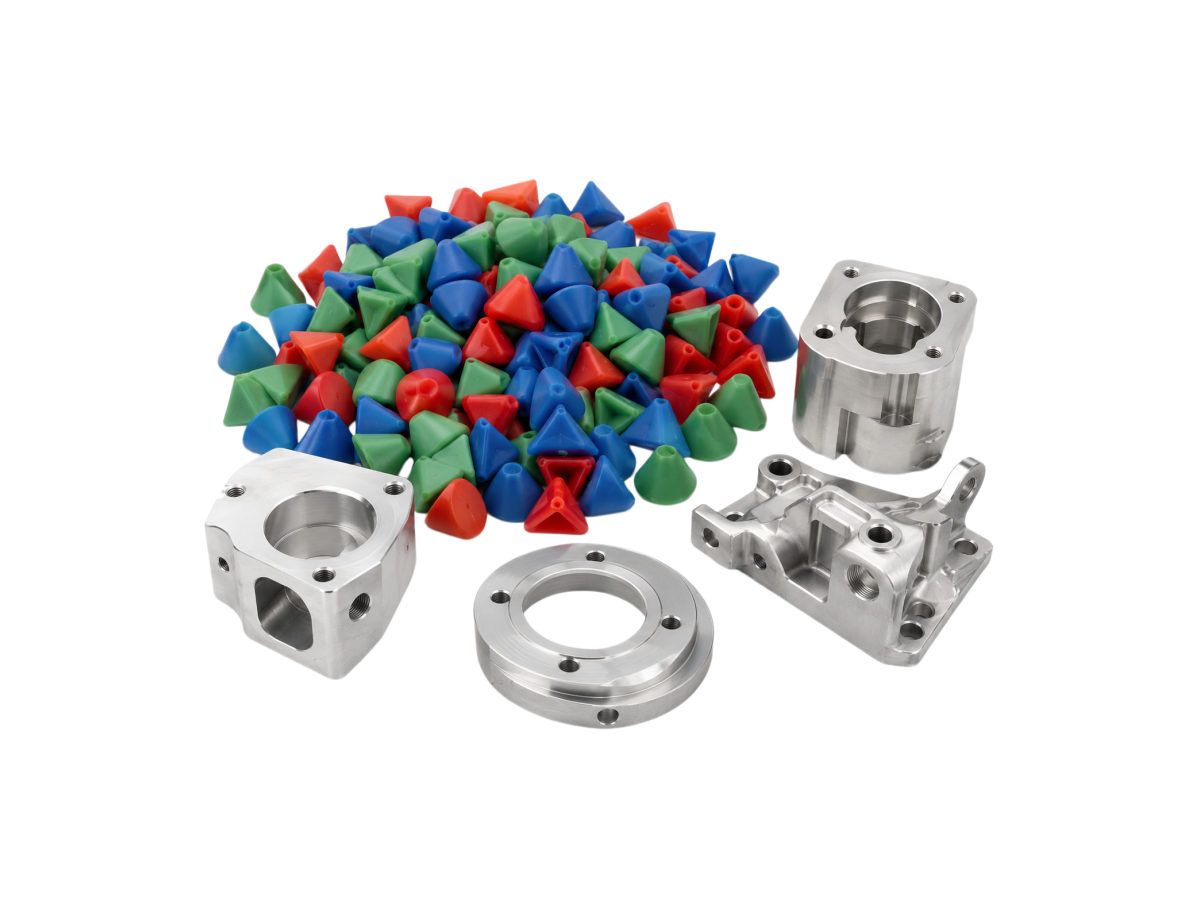
Plastic Tumbling Media
Plastic tumbling media is suitable for light to medium deburring and surface finishing of soft metals and delicate parts. Compared with ceramic media, it provides a gentler finishing effect and helps reduce surface scratches.
Best For: Light deburring, medium deburring, surface smoothing, scratch-sensitive parts, and soft metal finishing.
Suitable Materials: Aluminum, zinc alloy, brass, copper, plastic, and other soft or delicate materials.
Suitable Parts: CNC aluminum parts, die casting parts, brass fittings, copper parts, decorative components, precision parts, and parts with higher surface appearance requirements.
Finishing Effect: Smooths edges, reduces burrs, improves surface finish, and lowers the risk of aggressive cutting or visible scratches.
Recommended Use: Use with water and cleaning or polishing compound when processing aluminum, brass, zinc alloy, or other scratch-sensitive parts.
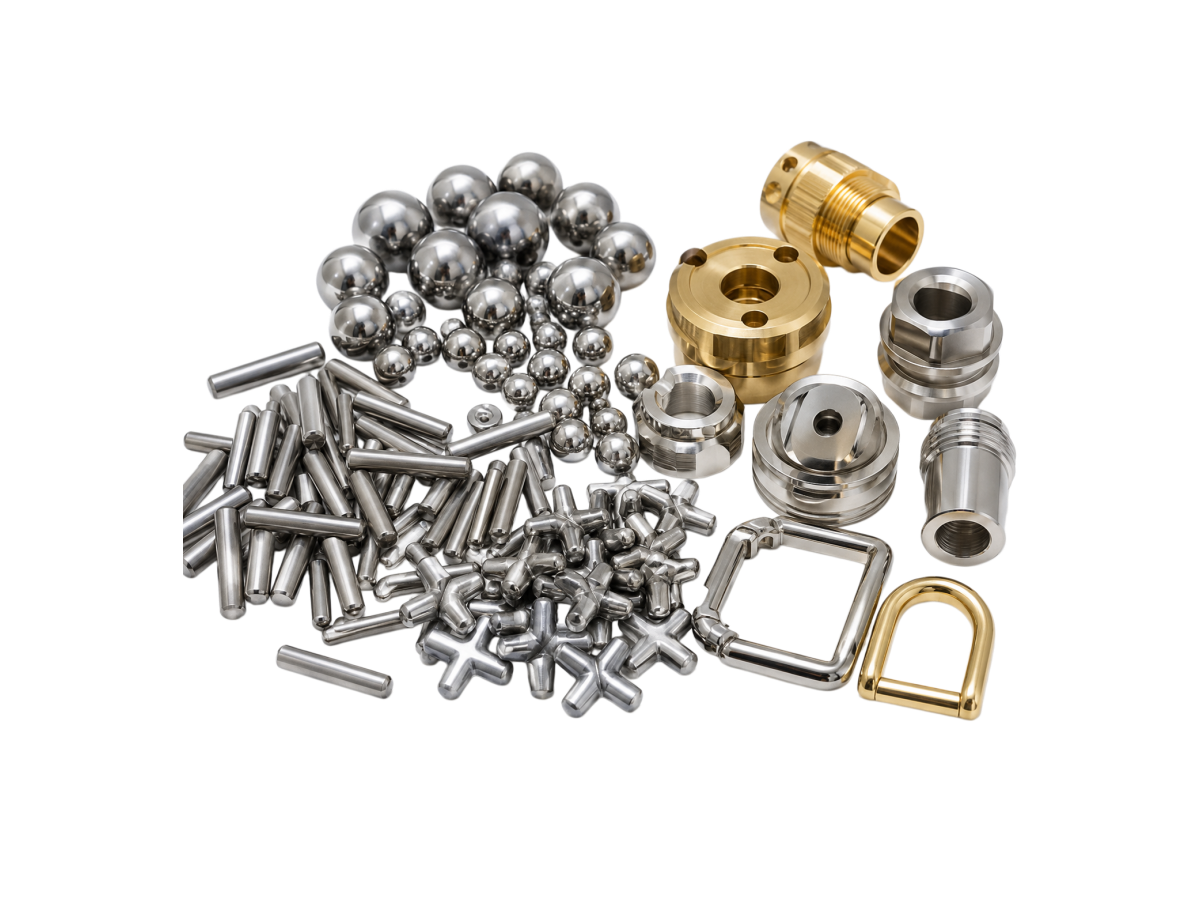
Steel Tumbling Media
Steel tumbling media is commonly used for burnishing, bright finishing, polishing, and surface compacting. It is suitable for parts that require a brighter, smoother, and more polished surface appearance.
Best For: Burnishing, bright polishing, surface compacting, fine finishing, and high-brightness surface improvement.
Suitable Materials: Stainless steel, brass, copper, aluminum, zinc alloy, and other metal parts suitable for polishing or burnishing.
Suitable Parts: Metal fittings, jewelry parts, decorative hardware, precision components, small stamped parts, and parts requiring a bright surface finish.
Finishing Effect: Improves brightness, smooths the surface, enhances appearance, and creates a more polished final finish.
Recommended Use: Use with polishing or brightening compound for better surface brightness and more stable polishing results.
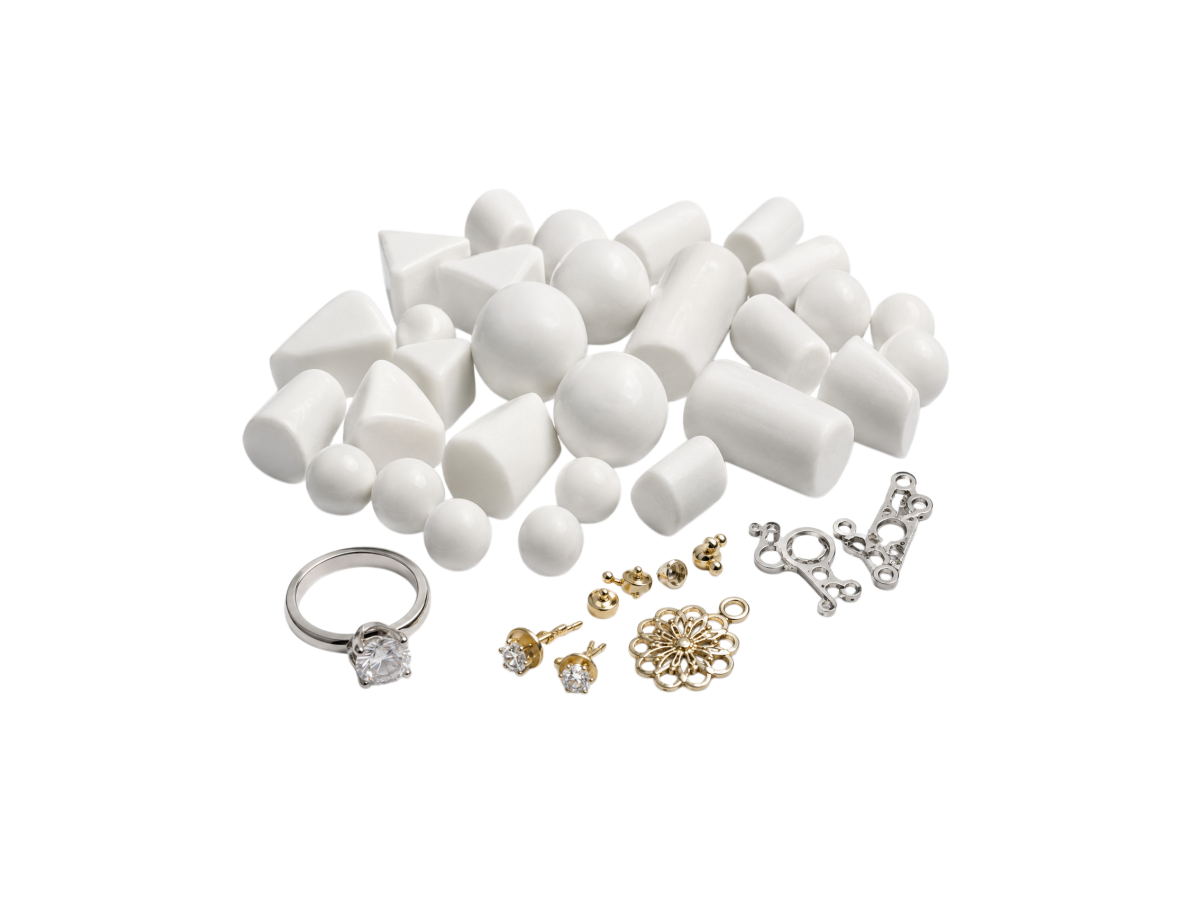
Porcelain Tumbling Media
Porcelain tumbling media is used for fine polishing and bright finishing. It provides a smooth and gentle finishing effect, making it suitable for delicate parts and components with high appearance requirements.
Best For: Fine polishing, bright finishing, delicate parts, decorative parts, and high-appearance surface finishing.
Suitable Materials: Stainless steel, brass, copper, aluminum, zinc alloy, jewelry materials, and decorative metal parts.
Suitable Parts: Jewelry parts, accessories, small precision parts, decorative hardware, watch components, and parts requiring a smooth final surface.
Finishing Effect: Improves surface brightness, creates a smoother finish, reduces minor surface marks, and enhances final product appearance.
Recommended Use: Use with polishing or brightening compound when parts require a smoother, cleaner, and more decorative finish.
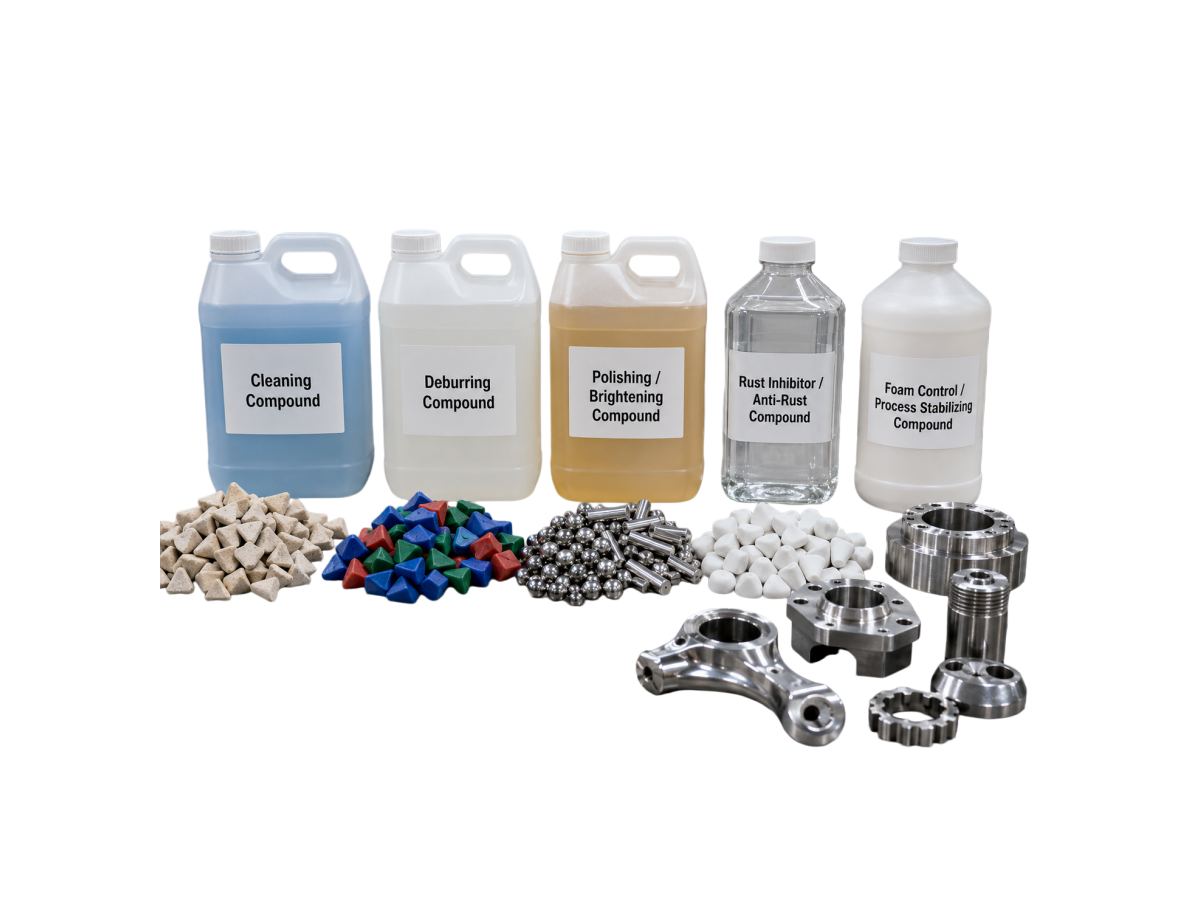
Finishing Compound
Finishing compound is used in wet vibratory finishing to improve cleaning, deburring, polishing, rust prevention, lubrication, foam control, and overall process stability. It works together with tumbling media and water to help achieve cleaner, smoother, brighter, and more consistent finishing results.
Main Purpose: Cleaning, deburring support, polishing, brightening, rust prevention, lubrication, foam control, surface protection, and process stability.
Best For: CNC machined parts, stamped parts, die casting parts, fasteners, hardware parts, aluminum parts, stainless steel parts, brass parts, copper parts, carbon steel parts, and general wet vibratory finishing applications.
Suitable Materials: Stainless steel, carbon steel, iron, aluminum, brass, copper, zinc alloy, alloy steel, and other common metal parts.
Problems It Solves: Oil stains, dirty surfaces, machining residue, sharp burrs, rough edges, dull surface, light oxidation, rust after wet finishing, excessive foam, unstable finishing results, poor lubrication, and inconsistent surface quality.
Use With: Ceramic media, plastic media, steel media, porcelain media, water, and wet vibratory finishing machines.
Application Types: Cleaning compound, deburring compound, polishing / brightening compound, rust inhibitor / anti-rust compound, and foam control / process stabilizing compound.
Recommended Use: Choose the suitable compound based on your part material, finishing goal, burr condition, and required surface result. For example, cleaning compound is used for oil and residue removal, polishing compound is used for brighter surfaces, and rust inhibitor is used for carbon steel or iron parts after wet finishing.
Download our catalog to find more solutions
How to Choose the Right Tumbling Media for Your Parts
The best tumbling media is not chosen by product name alone. It depends on your part material, burr level, geometry, target finish, machine type and finishing compound.
Choosing the right tumbling media is one of the most important steps in a mass finishing process. The wrong media may remove burrs too slowly, scratch soft metal parts, get stuck in holes, create inconsistent surface results, or fail to deliver the polishing effect you need.
At ShinyStar Machinery, we help customers select ceramic tumbling media, plastic tumbling media, porcelain polishing media, steel tumbling media, organic dry polishing media and finishing compounds based on real part conditions. Instead of only selling standard media, we recommend a complete media and compound solution for deburring, edge rounding, surface smoothing, cleaning, polishing, burnishing and rust prevention.
Part Material
Different materials need different media hardness, density and cutting force.
Common examples:
- Steel / stainless steel: ceramic media or steel media
- Aluminum / brass / copper: plastic media or fine polishing media
- Titanium / hard metals: stronger ceramic deburring media
- Plastic / rubber: gentle plastic media
- Jewelry / precision parts: porcelain, steel pins or dry polishing media
Soft metals usually need lower-impact media to avoid scratches, while hard metals often need stronger cutting media for effective burr removal.
Burr Level
The size and strength of the burr decide how aggressive the media should be.
Recommended direction:
- Heavy burrs: fast-cut ceramic tumbling media
- Medium burrs: medium-cut ceramic or plastic media
- Light burrs: plastic media or fine finishing media
- No burr, only brightening: steel media, porcelain media or organic polishing media
If the media is too weak, finishing time becomes too long. If the media is too aggressive, it may remove too much material or damage the surface.
Part Geometry
The shape of the part affects media access, contact area and lodging risk.
Check carefully:
- Holes
- Slots
- Threads
- Inner corners
- Thin edges
- Blind holes
- Complex die-cast structures
Media size and shape must be smaller enough to reach the working area, but not so small that it gets trapped inside the part.
Target Finish
Different media create different finishing results.
Common goals:
- Deburring
- Edge rounding
- Surface smoothing
- Descaling
- Cleaning
- Pre-plating preparation
- Polishing
- Burnishing
- Bright finishing
Ceramic media is mainly used for cutting and deburring. Plastic media is better for soft metals and surface refinement. Steel media and porcelain media are often used for polishing and burnishing.
Machine Type
Tumbling media must match the finishing machine.
Common machines:
- Vibratory finishing machine
- Centrifugal disc finishing machine
- Rotary barrel tumbler
- Magnetic polishing machine
- Vibratory dryer
The same media can perform differently in different machines. A vibratory finishing machine, centrifugal disc machine and barrel tumbler may require different media size, loading ratio, processing time and compound dosage.
Compound Selection
Finishing compound is part of the process, not an optional accessory.
Common compound choices:
- Grinding compound for deburring
- Cleaning compound for oil and residue removal
- Polishing compound for brightness
- Rust inhibitor for wet finishing
- Foam control compound for stable operation
- Polishing paste for dry polishing
The right finishing compound can improve cutting stability, cleaning performance, brightness, rust protection and batch consistency.
Send us your part photos, material, burr condition, current finishing problem and target surface finish. Our team will recommend the right tumbling media, finishing compound and process parameters for your application.
Media Shape, Size & Cutting Grade Options
The right tumbling media is not selected by material alone. Shape, size, cutting grade, compound and machine settings all affect deburring performance, surface finish, media lodging risk and batch consistency.
In mass finishing, choosing the right tumbling media material is only the first step. The media shape, media size and cutting grade also determine how the media contacts your parts, how fast burrs are removed, whether the media can reach holes or slots, and whether finished parts are easy to separate after processing.
At ShinyStar Machinery, we do not simply recommend ceramic tumbling media, plastic tumbling media or polishing media by product name. We review your part material, part geometry, burr condition, hole size, target surface finish, machine type and production volume before selecting the most suitable finishing media and compound combination.
This helps reduce common problems such as poor deburring, part scratches, media lodging, uneven polishing results and unstable batch performance.
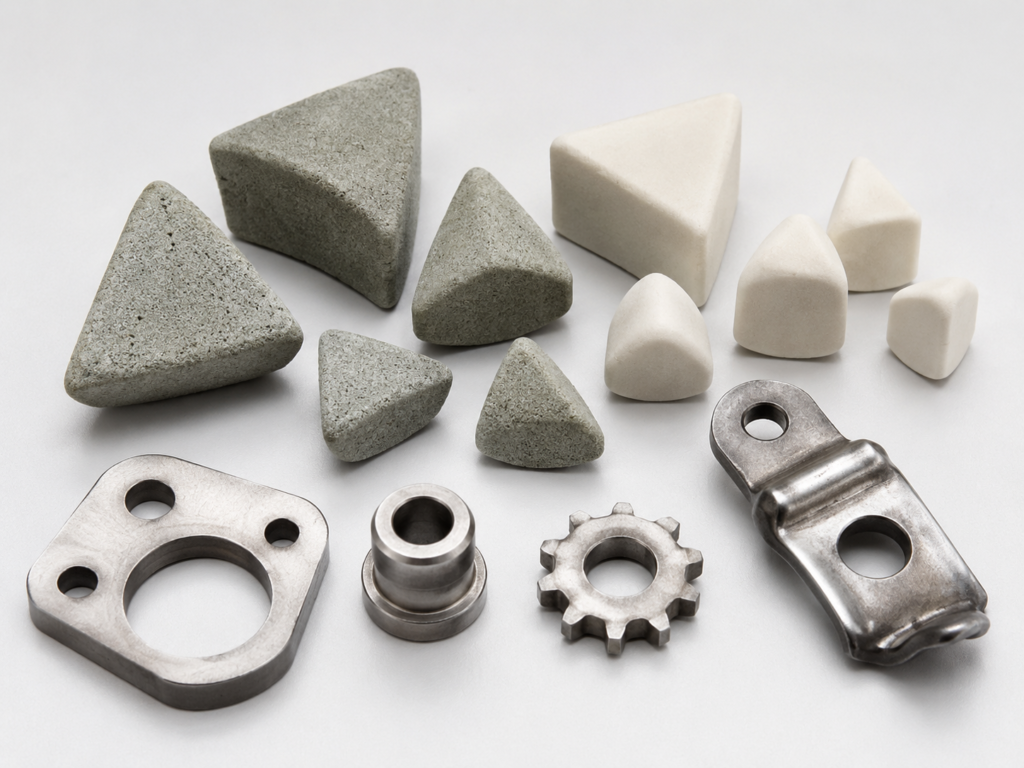
Triangle & Angle-Cut Media
Best For
General deburring, edge rounding, surface smoothing and cutting marks removal.
Common Media Types
Ceramic tumbling media, plastic tumbling media.
Typical Applications
CNC machined parts, stamped parts, die-cast parts, laser-cut parts and general hardware.
Why It Matters
Triangle and angle-cut media provide strong edge contact, making them suitable for burr removal and edge radiusing. They are commonly used as deburring media in vibratory finishing machines and centrifugal finishing systems.
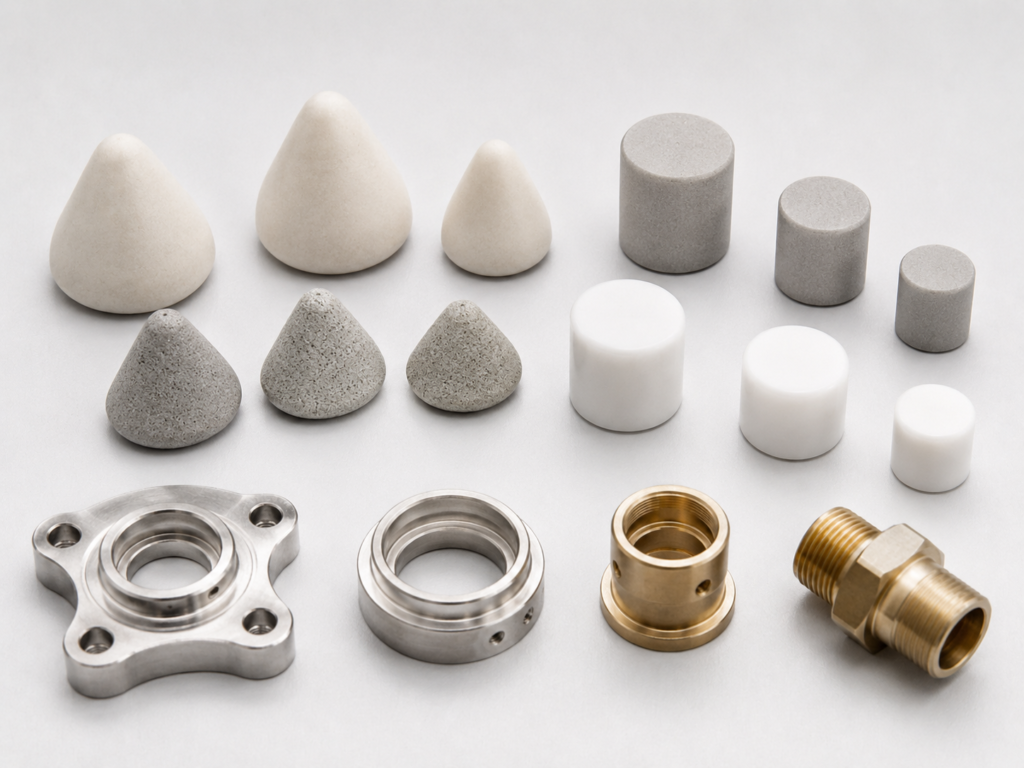
Cylinder & Cone Media
Best For
Surface smoothing, corner contact and controlled finishing on medium-complexity parts.
Common Media Types
Ceramic media, plastic media, porcelain media.
Typical Applications
Aluminum parts, brass parts, zinc alloy parts, machined components and small metal hardware.
Why It Matters
Cylinder and cone shapes offer stable rolling and contact movement. They are useful when the process requires a balance between cutting performance, surface contact and part protection.
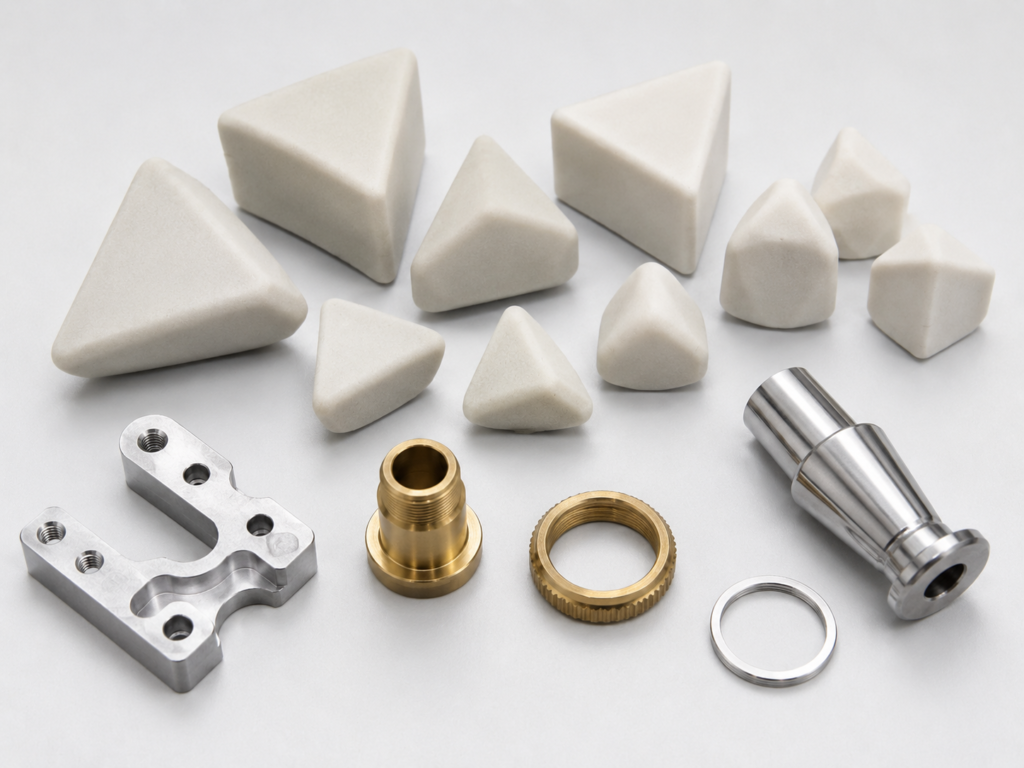
Pyramid & Tetrahedron Media
Best For
Light to medium deburring, soft metal finishing and pre-plating surface preparation.
Common Media Types
Plastic tumbling media, resin-bonded finishing media.
Typical Applications
Aluminum, brass, copper, zinc, magnesium, plastic parts and rubber parts.
Why It Matters
Pyramid and tetrahedron media are often selected for soft metals because they provide effective contact while reducing the risk of deep scratches. They are suitable for pre-anodizing, pre-plating and pre-painting finishing processes.
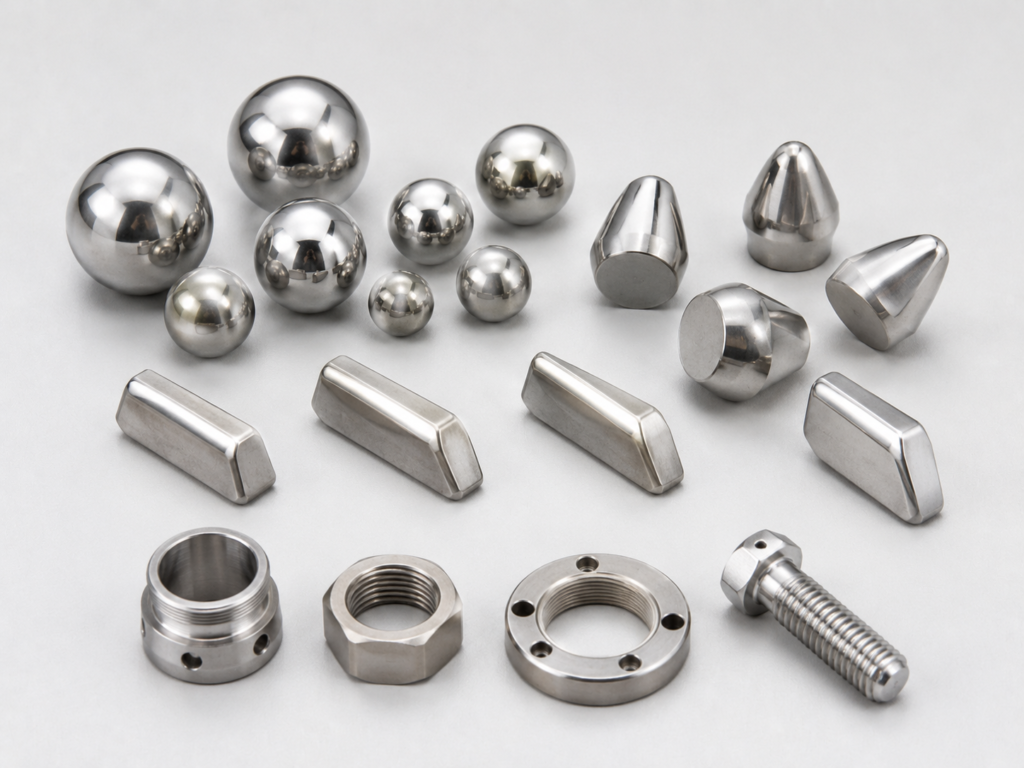
Ball, Ballcone & Diagonal Steel Media
Best For
Burnishing, shining, bright finishing and light deburring.
Common Media Types
Stainless steel tumbling media, carbon steel media, steel shot pins.
Typical Applications
Stainless steel parts, jewelry, small hardware, die-cast parts and magnetic polishing processes.
Why It Matters
Steel media is mainly used as polishing media rather than heavy cutting media. It can improve surface brightness, support burnishing and provide long service life with low media wear.
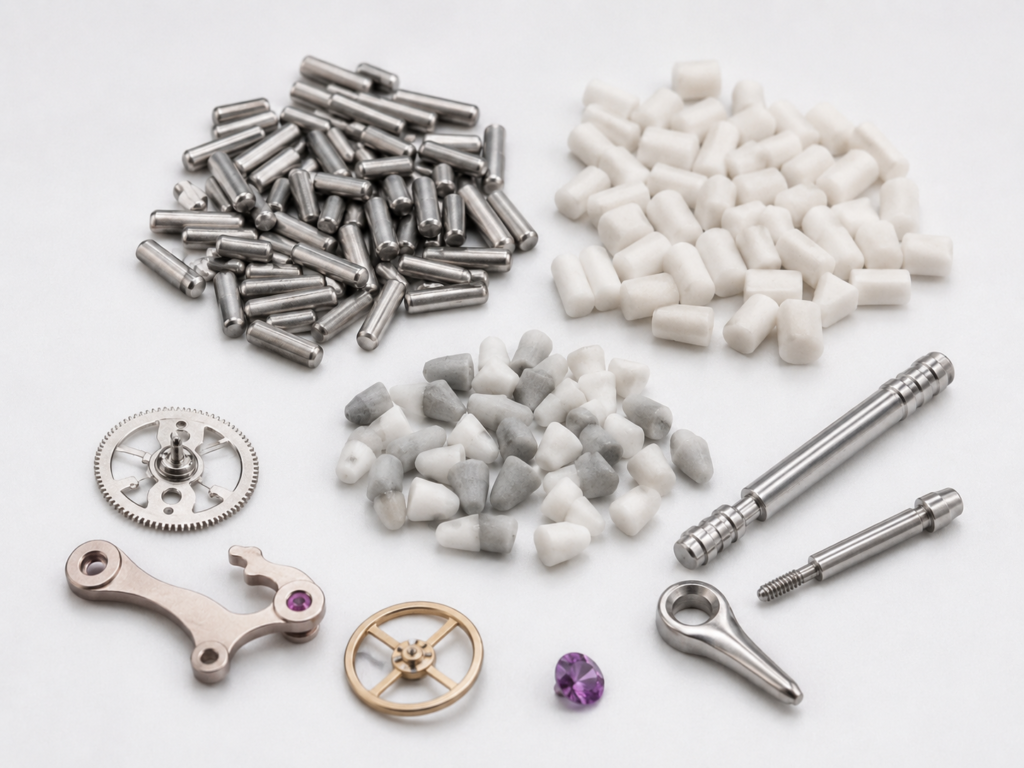
Pins & Fine Precision Media
Best For
Small holes, narrow gaps, delicate surfaces and precision polishing.
Common Media Types
Steel pins, porcelain pins, fine polishing media.
Typical Applications
Jewelry, watch parts, medical parts, dental parts, precision hardware and small stainless steel components.
Why It Matters
Pins and fine media can reach small areas where larger media cannot. They are useful for precision polishing, but size selection must be carefully checked to avoid media lodging inside holes or slots.
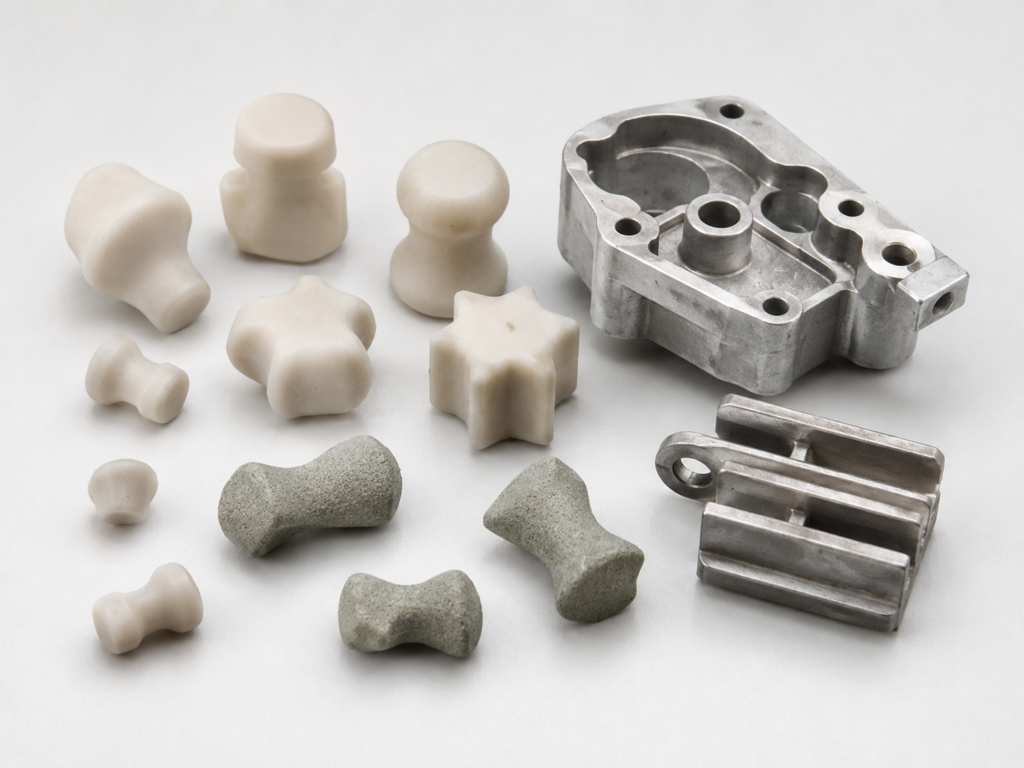
Special Shape Media for Holes, Slots & Complex Parts
Best For
Deep holes, grooves, recesses, complex die-cast parts and parts with lodging risk.
Common Media Types
Nipple shape plastic media, special shape plastic media, custom finishing media.
Typical Applications
Complex aluminum die castings, slotted components, soft metal parts and parts with internal structures.
Why It Matters
Special shape media can improve contact in areas that standard tumbling media may not reach. It also helps reduce the risk of media getting stuck in holes, slots or recesses.
How Media Size Affects Finishing Results
Media size directly affects deburring efficiency, surface coverage, separation difficulty and media lodging risk. Smaller media can reach more detailed areas, but it may get stuck in holes, threads or narrow slots. Larger media is easier to separate, but it may not reach tight corners or internal areas.
Before recommending tumbling media size, ShinyStar Machinery checks your part dimensions, hole diameter, slot width, burr location, machine capacity and separation method. This helps us select media that can finish the required surface without creating new problems during production.
| Media Size Direction | Best For | Advantages | Possible Risk |
|---|---|---|---|
| Small Media | Small parts, fine details, holes, narrow corners | Better contact with detailed areas | Higher risk of media lodging and harder separation |
| Medium Media | General deburring and polishing | Good balance of cutting, contact and separation | May not reach very small holes or deep recesses |
| Large Media | Larger parts, open surfaces, easier separation | Lower lodging risk and easier media separation | May miss tight corners or small internal areas |
| Mixed Size Media | Complex surfaces and uneven geometry | Better overall surface coverage | Requires process testing to control consistency |
| Special Size Media | Parts with holes, slots or unusual geometry | Can reduce lodging and improve finishing contact | Needs part drawings or sample testing before selection |
Cutting Grade Options for Deburring, Smoothing and Polishing
The cutting grade of tumbling media determines how aggressively the media removes burrs, oxidation, tool marks or surface defects. However, cutting performance does not depend on media alone. It is also affected by abrasive formula, media shape, media size, finishing compound, machine speed, water level, loading ratio and processing time.
That is why ShinyStar Machinery recommends the complete process instead of only supplying deburring media or polishing media. The right cutting grade should remove the burrs efficiently while protecting the part surface and controlling material removal.
| Cutting Grade | Recommended Use | Common Media Direction | Compound Direction |
|---|---|---|---|
| Fast Cutting | Heavy burrs, sharp edges, rust, scale, laser-cut slag | Ceramic tumbling media | Grinding compound |
| Medium Cutting | General deburring and edge rounding | Ceramic media or plastic media | Grinding or cleaning compound |
| Light Cutting | Soft metal finishing, mild burr removal, surface smoothing | Plastic tumbling media | Mild grinding or polishing compound |
| Fine Finishing | Surface refinement before plating, coating or anodizing | Fine plastic media, porcelain media | Cleaning or polishing compound |
| Non-Cutting / Burnishing | Bright finishing, polishing and surface shine improvement | Steel media, porcelain media | Brightening compound |
| Dry Polishing | Final polishing and delicate surface brightening | Walnut shell, corn cob media | Polishing paste |
Wrong Media Selection Can Create New Problems
A media that removes burrs quickly may also scratch soft parts. A small media that reaches holes may also get stuck inside the part. A polishing media that improves brightness may not remove heavy burrs. That is why media shape, size and cutting grade must be selected together with the right finishing compound and machine process.
For every project, we consider:
- Part material
- Burr size and burr location
- Hole diameter and slot width
- Required surface finish
- Wet or dry finishing process
- Machine type and machine capacity
- Media separation method
- Required production output
- Acceptable material removal
- Rust prevention or drying requirement
Send us your part photos, material, dimensions, hole size, burr condition and target finish. Our engineers will help you select the right tumbling media shape, media size, cutting grade, finishing compound and process parameters for your application.
Media, Compound and Machine Matching for Better Finishing Results
Choosing the right tumbling media is only one part of a successful mass finishing process. To achieve stable deburring, polishing, cleaning, brightening or rust prevention results, the media must be matched with the correct finishing compound and the right finishing machine.
At ShinyStar Machinery, we do not simply recommend ceramic media, plastic media or steel tumbling media by product name. We help you build a complete finishing process based on your part material, burr condition, surface finish requirement, machine type, production capacity and post-treatment process.
Why Machine, Media and Compound Must Be Matched Together
In mass finishing, the final result is not decided by one single factor. The same vibratory finishing machine can create very different results when using different tumbling media, compound, water ratio, processing time and loading method.
For example, ceramic tumbling media may be suitable for heavy deburring on stainless steel or carbon steel parts, but it may be too aggressive for soft aluminum or brass parts. Plastic tumbling media can provide smoother finishing for soft metals, but it may not remove heavy burrs efficiently. Steel tumbling media can improve brightness, but it is mainly used for burnishing rather than strong cutting. Finishing compound also changes the result by improving cleaning, polishing, rust prevention, foam control and process stability.
This is why ShinyStar Machinery provides a complete media + compound + machine matching solution instead of only supplying standard finishing media. We help customers choose the right combination before bulk purchase, so the finishing result is easier to control in real production.
Media + Compound + Machine Matching Guide
| Machine Type | Recommended Tumbling Media | Recommended Finishing Compound | Typical Applications | Main Result |
|---|---|---|---|---|
| Vibratory Finishing Machine | Ceramic media, plastic media, porcelain media, steel media | Grinding compound, cleaning compound, polishing compound, rust inhibitor | CNC parts, die casting parts, stamped parts, laser cut parts, hardware parts | Deburring, edge rounding, surface smoothing, cleaning |
| Centrifugal Disc Finishing Machine | Ceramic media, plastic media, porcelain media | Grinding compound, polishing compound, cleaning compound | Small precision parts, hardware, washers, eyeglass parts, watch components | Faster deburring and polishing for small parts |
| Centrifugal Barrel Finishing Machine | Fine ceramic media, porcelain media, precision polishing media | Polishing compound, cleaning compound | Jewelry parts, medical parts, dental parts, aerospace small parts, high-value precision parts | Fine polishing, isotropic finishing, controlled surface improvement |
| Rotary Barrel Tumbler | Ceramic media, porcelain media, walnut shell, corn cob media | Polishing compound, polishing paste | Delicate parts, jewelry, aluminum parts, dry polishing, gentle tumbling | Gentle deburring, dry polishing, final brightening |
| Magnetic Polishing Machine | Stainless steel pins, magnetic steel media | Cleaning compound, polishing compound | Small holes, inner corners, jewelry, precision metal parts | Internal polishing, hole cleaning, bright finishing |
| Vibratory Dryer | Corn cob media, drying media, walnut shell media | Rust inhibitor, cleaning support compound | Wet-finished metal parts, parts before packaging, plating or coating | Drying, water spot reduction, rust prevention |
Not Sure Which Combination Is Right?
Many finishing problems come from using the wrong combination rather than using the wrong machine alone. If the media is too large, it may not reach small corners. If the media is too small, it may get stuck in holes. If the compound is not suitable, parts may become dull, dirty, stained or rusty after wet finishing.
Our team can help you check:
- Part material and hardness
- Burr size and burr location
- Hole, slot and thread structure
- Current machine type and capacity
- Required surface roughness or brightness
- Wet or dry finishing requirement
- Cleaning, drying and rust prevention needs
- Daily production volume and batch consistency target
Send us your part photos, material, dimensions, hole size, burr condition and target finish. Our engineers will help you select the right tumbling media shape, media size, cutting grade, finishing compound and process parameters for your application.
applications, Parts & Materials for Vibratory Finishing
Different industries require different tumbling media, finishing compounds and process settings. As a tumbling media manufacturer, ShinyStar Machinery helps customers select the right ceramic tumbling media, plastic tumbling media, steel tumbling media, porcelain polishing media and finishing compound according to part material, burr condition, surface finish requirement and production capacity.
Whether you need heavy deburring, light edge rounding, surface smoothing, polishing, cleaning, rust prevention or dry finishing, we provide media and compound combinations matched to your real parts instead of offering one standard solution for every application.
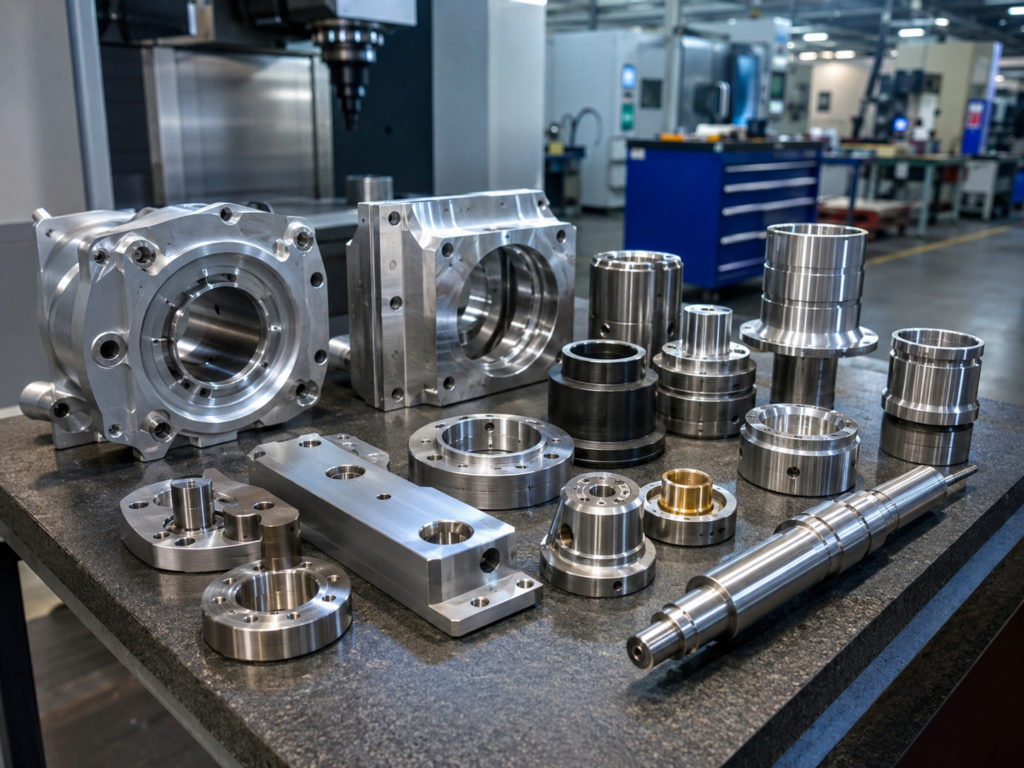
CNC Machining Parts
Industry: CNC machining shops, precision machining factories, contract manufacturers
Products: CNC aluminum parts, stainless steel machined parts, brass fittings, turned parts, milled parts, drilled parts
Materials: Aluminum, stainless steel, carbon steel, brass, copper, titanium
Common finishing goals:
Deburring, Edge rounding, Surface smoothing, Cleaning, Pre-anodizing preparation
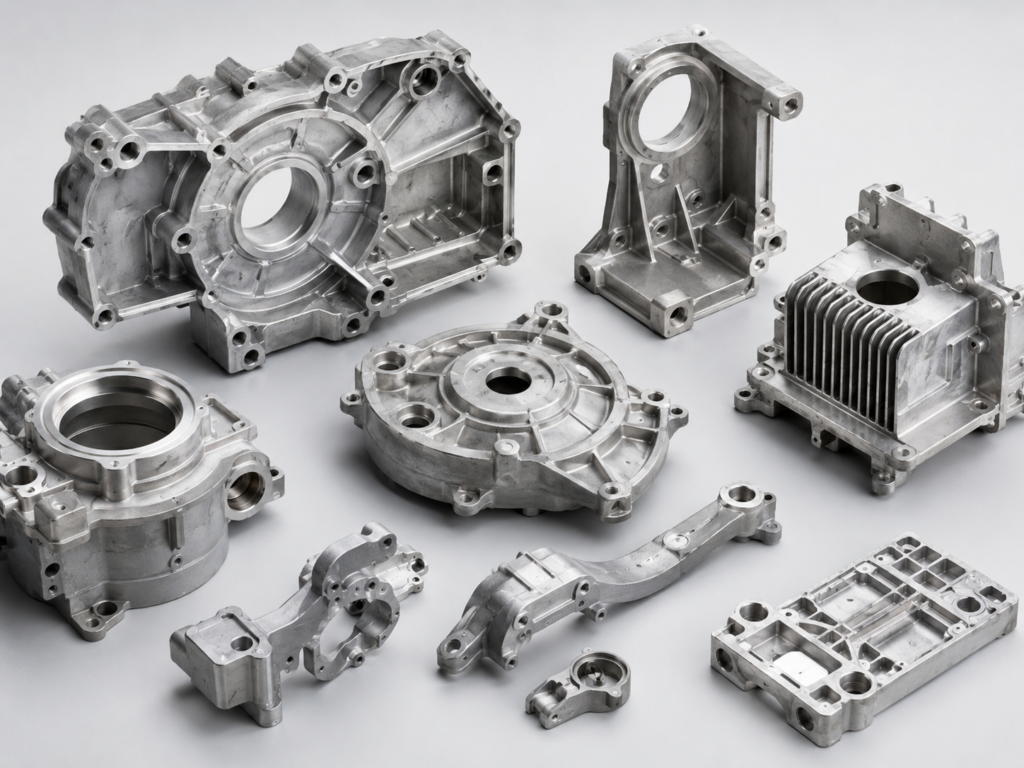
Die Casting Parts
Industry: Die casting factories, automotive parts suppliers, hardware manufacturers
Products: Zinc alloy castings, aluminum die castings, small housings, brackets, handles, decorative hardware
Materials: Aluminum alloy, zinc alloy, magnesium alloy, brass
Common finishing goals:
Flash removal, Surface smoothing, Edge rounding
Cleaning, Pre-coating surface preparation
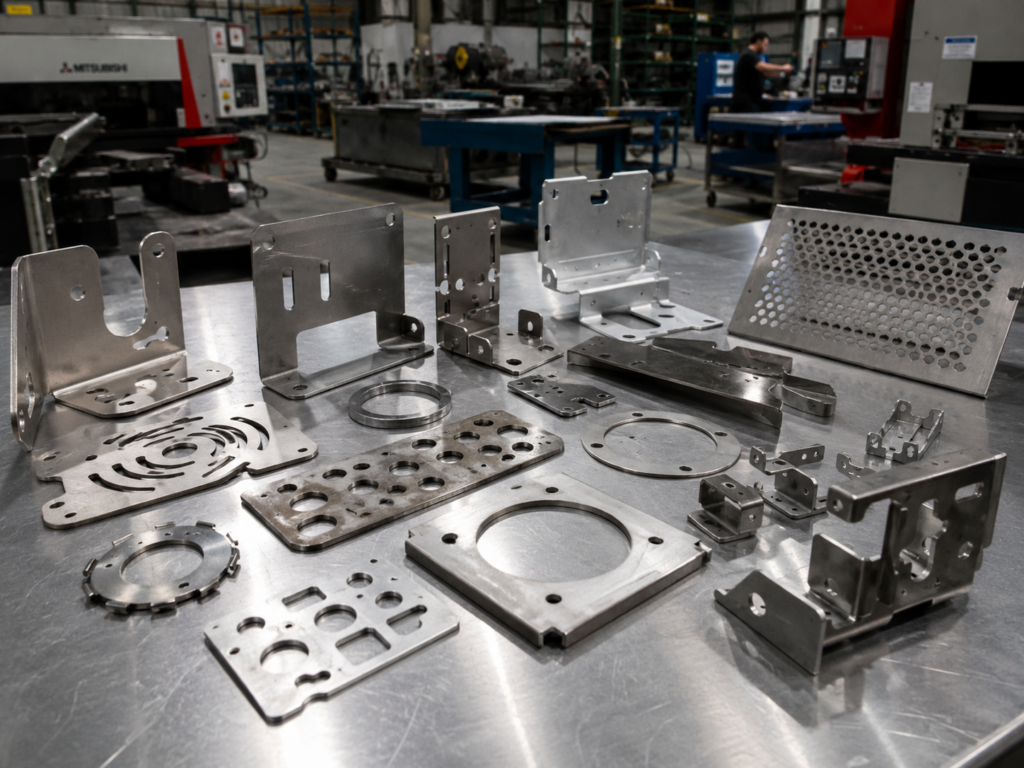
Stamped & Laser-Cut Parts
Industry: Stamping factories, sheet metal manufacturers, laser cutting workshops
Products: Stamped plates, brackets, washers, clips, small sheet metal parts, laser-cut components
Materials: Stainless steel, carbon steel, aluminum, copper, brass
Common finishing goals:
Burr removal, Sharp edge smoothing, Oxide removal
Surface cleaning, Batch finishing consistency
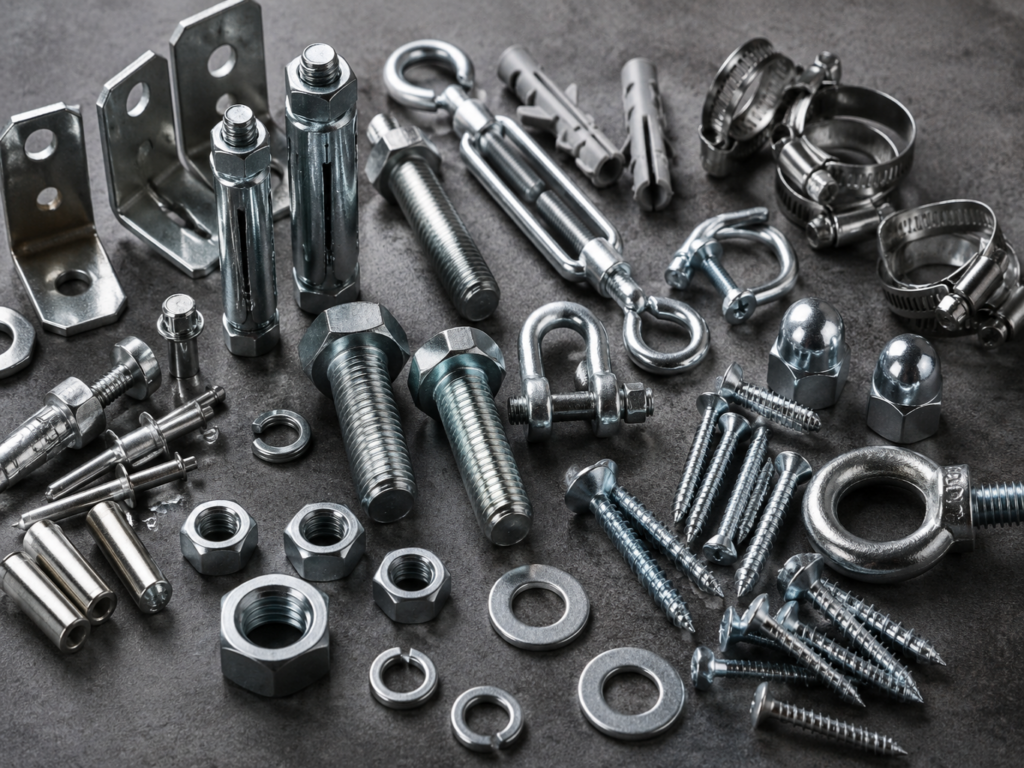
Hardware & Fasteners
Industry: Hardware manufacturers, fastener factories, tool suppliers, metal parts distributors
Products: Screws, nuts, bolts, washers, pins, fittings, hinges, tools, small hardware components
Materials: Carbon steel, stainless steel, brass, copper, zinc alloy
Common finishing goals:
Mass deburring, Cleaning, Rust removal, Surface smoothing, Pre-plating preparation
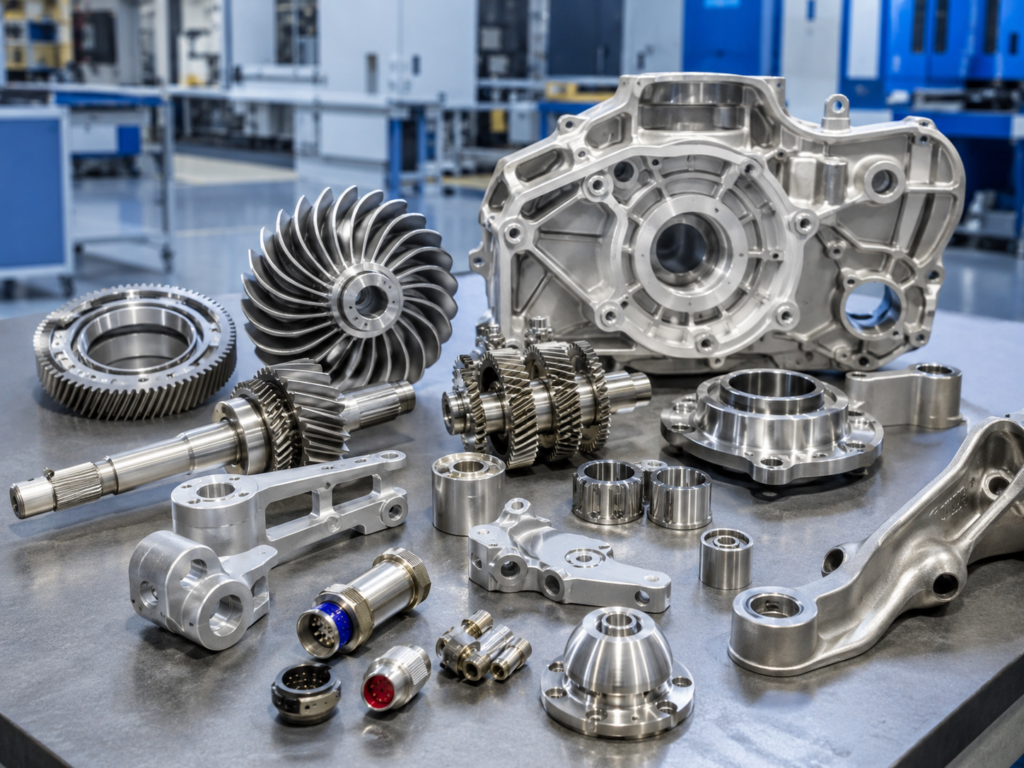
Automotive & Aerospace Components
Industry: Automotive suppliers, aerospace component manufacturers, precision engineering companies
Products: Engine parts, brackets, connectors, aluminum parts, precision metal components, small structural parts
Materials: Aluminum, stainless steel, carbon steel, titanium, brass, zinc alloy
Common finishing goals:
Controlled deburring, Edge rounding, Surface consistency, Cleaning, Pre-assembly finishing
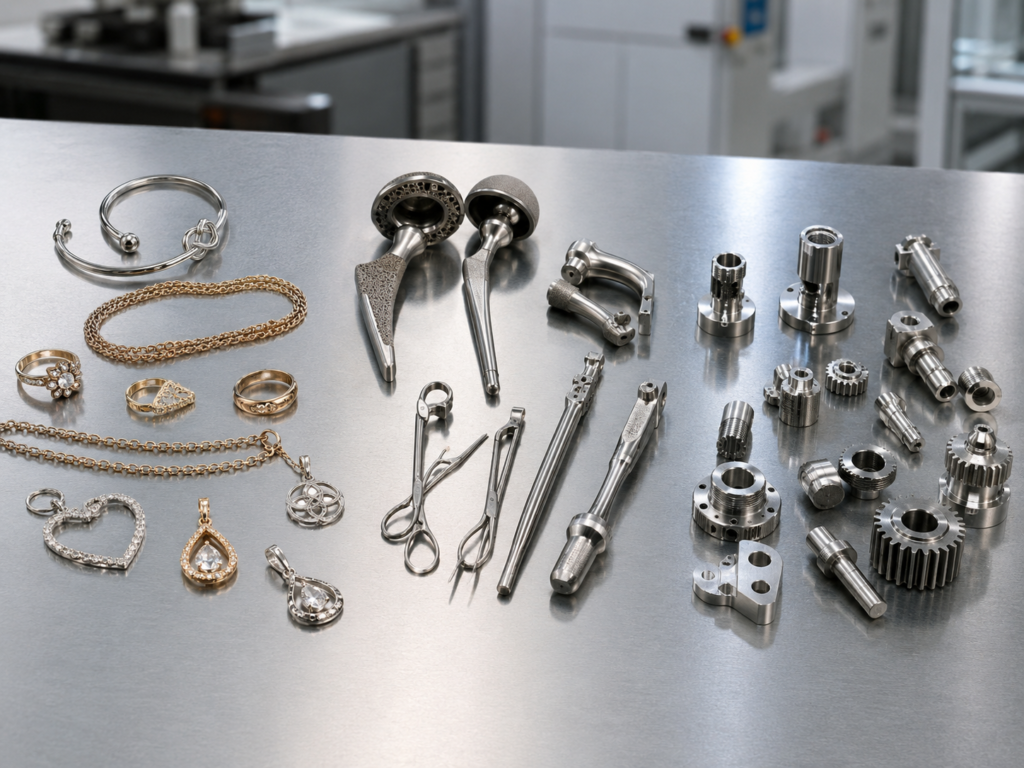
Jewelry, Medical & Precision Parts
Industry: Jewelry manufacturers, medical device suppliers, electronics parts factories, precision component manufacturers
Products: Jewelry parts, small decorative parts, medical components, electronic hardware, small plastic or metal precision parts
Materials: Stainless steel, titanium, brass, copper, aluminum, plastic, ceramic
Common finishing goals:
Fine polishing, Light deburring, Surface cleaning, Bright finishing, Delicate part protection
Whether you manufacture CNC parts, die casting parts, hardware, fasteners, or automotive components, we can recommend a suitable finishing process.
Before & After Finishing Results with the Right Tumbling Media and Compound
The final surface result does not depend on tumbling media alone. Part material, burr condition, media type, compound formula, machine setting and processing time all affect the result. At ShinyStar Machinery, we help customers test and select the right tumbling media, finishing compound and mass finishing process before bulk production.
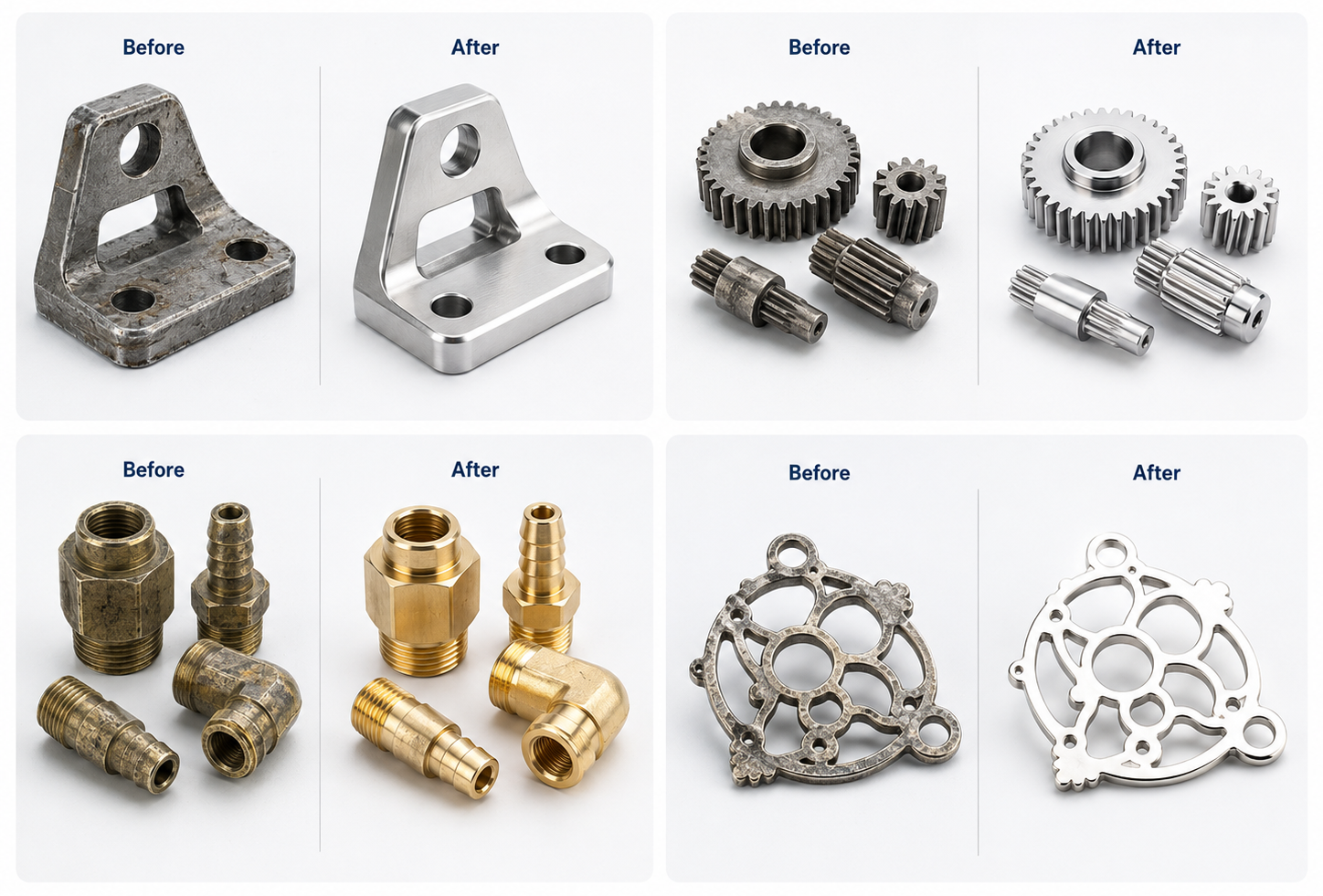
Every part has a different finishing problem. Some parts need strong deburring, some need a smoother surface before plating, while others need bright polishing or rust prevention after wet tumbling. That is why we do not simply recommend one standard media for every customer.
By testing your parts with different ceramic tumbling media, plastic tumbling media, steel media, porcelain polishing media and finishing compounds, we can help you find a more stable and repeatable process for deburring, edge rounding, surface smoothing, cleaning, polishing and drying.
Send your untreated parts or photos. We can test the process and show before-and-after results before you choose the machine.
Factory Strength for Stable Tumbling Media & Compound Supply
As a tumbling media manufacturer and finishing compound supplier, ShinyStar Machinery helps customers build repeatable deburring, polishing, cleaning and rust prevention results through controlled media production, process testing, bulk supply and long-term technical support.
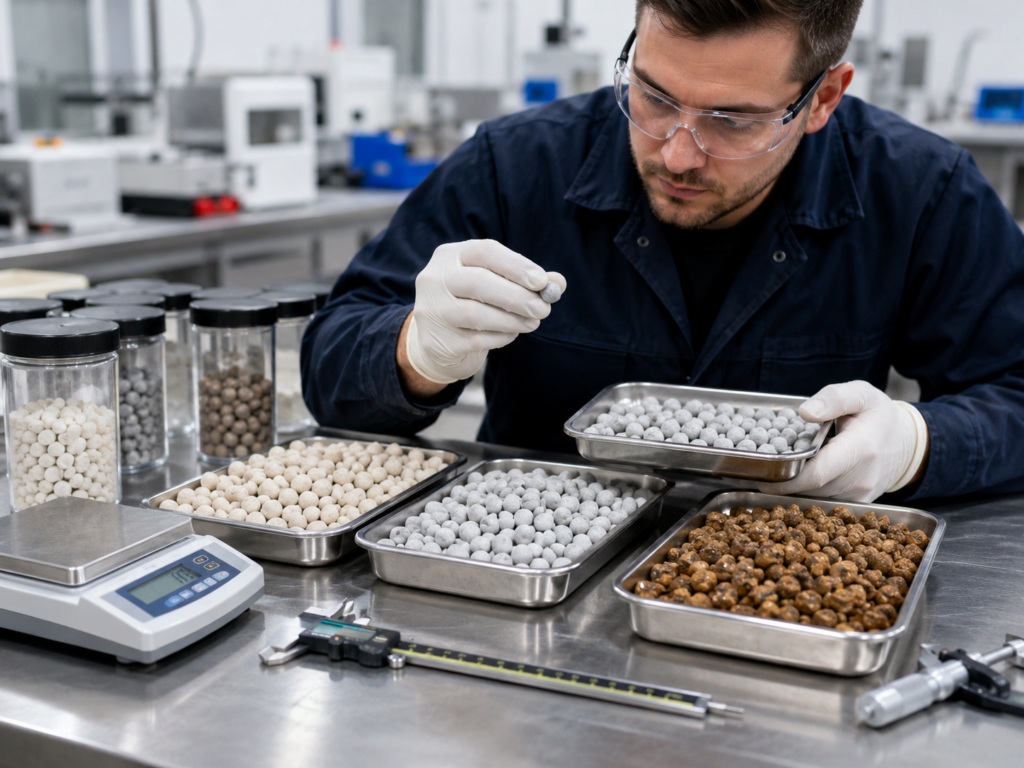
Controlled Media Formulation
Main Focus
Stable cutting force, wear resistance and finishing consistency.
What We Control
- Abrasive formulation for ceramic tumbling media
- Resin and abrasive balance for plastic tumbling media
- Density, hardness and cutting grade selection
- Media wear performance for long-term use
Why It Matters
If media cutting performance changes from batch to batch, your deburring result, processing time and surface finish will also change. Stable formulation helps customers maintain repeatable finishing results in daily production.
Best For
Deburring media, polishing media, ceramic media, plastic media and mass finishing media used in continuous industrial production.
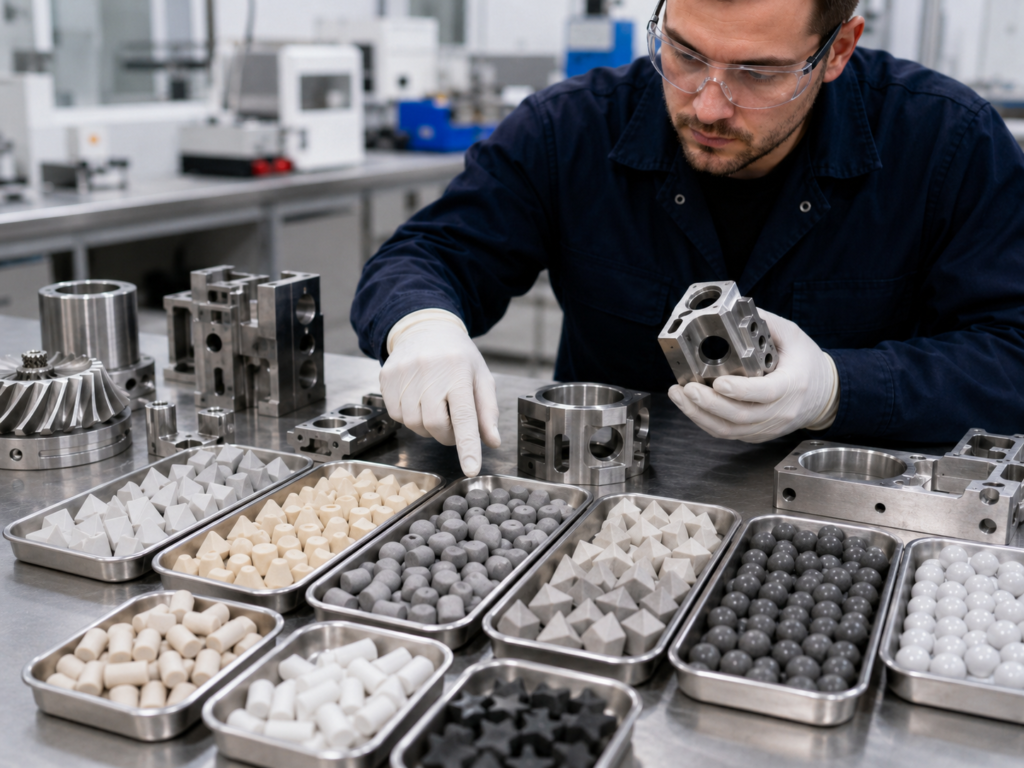
Shape, Size & Cutting Grade Selection
Main Focus
Reduce media lodging, improve contact efficiency and protect part surfaces.
What We Support
- Triangle, cone, cylinder, angle-cut and pyramid media
- Ball, pin, diagonal and special shape media
- Fast cutting, medium cutting, light cutting and fine finishing grades
- Media size selection based on holes, slots, grooves and part geometry
Why It Matters
The wrong media size may get stuck in holes. The wrong shape may miss corners. The wrong cutting grade may either fail to remove burrs or scratch the parts. We help customers choose media according to the real part structure, not only by material name.
Best For
Complex die casting parts, CNC machined parts, laser cut parts, stamped parts, aluminum parts and stainless steel parts.
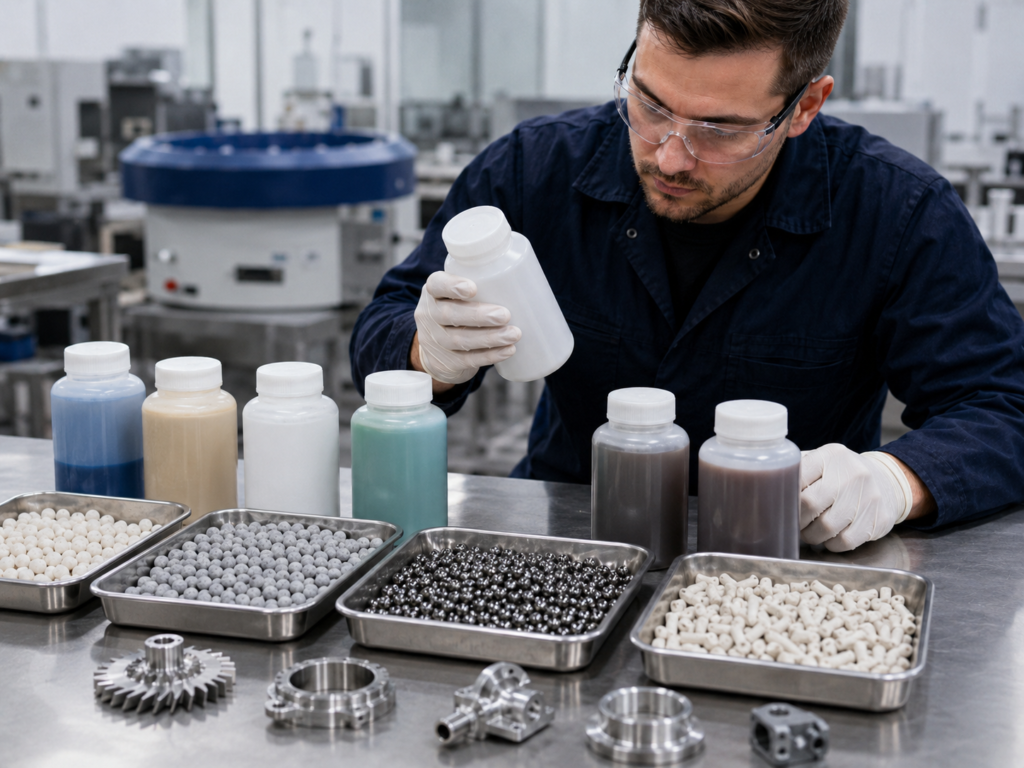
Finishing Compound Matching
Main Focus
Improve cleaning, polishing brightness, rust prevention and process stability.
Compound Options
- Grinding compound for wet deburring
- Cleaning compound for oil, dust and residue removal
- Polishing compound for brighter metal surfaces
- Rust inhibitor for wet finishing protection
- Foam control compound for stable process operation
- Polishing paste for walnut shell and corn cob dry polishing
Why It Matters
The same tumbling media can produce different results with different finishing compounds. The right compound helps control foam, remove dirt, improve brightness, reduce rust risk and make the whole mass finishing process more stable.
Best For
Customers who need tumbling compound, vibratory finishing compound, polishing compound or anti-rust compound together with media supply.
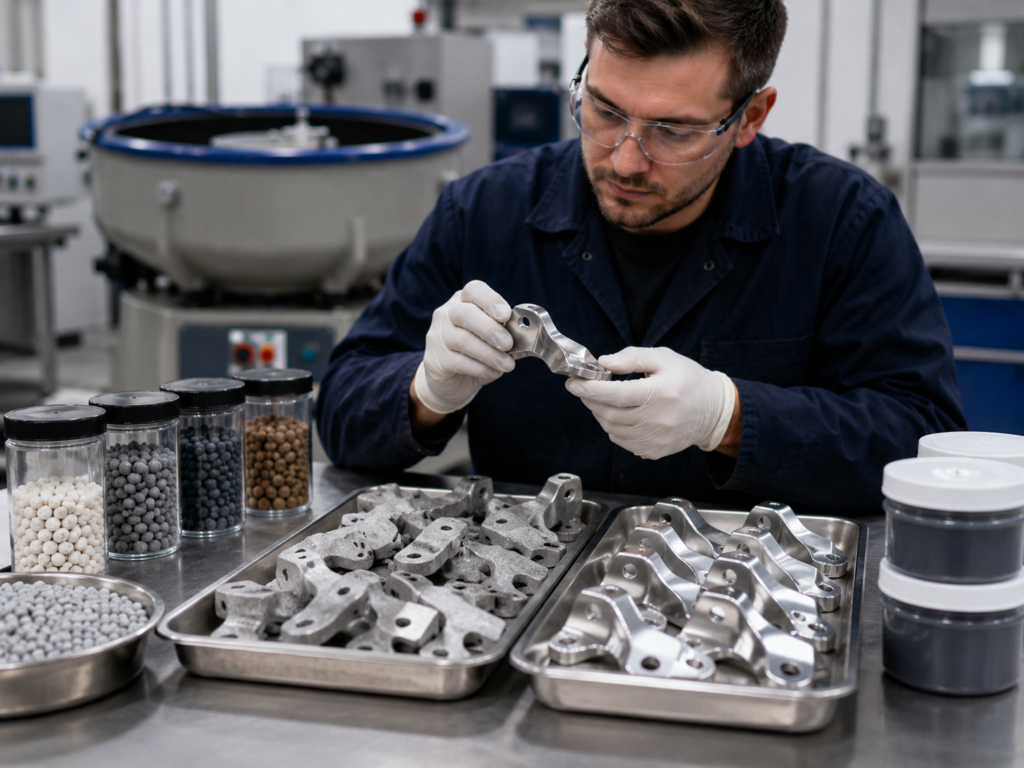
Sample Testing Before Bulk Order
Main Focus
Reduce purchasing risk before mass production.
Testing Support
- Part material and burr condition analysis
- Media and compound combination testing
- Wet or dry finishing process trial
- Before and after result comparison
- Recommended process time, media type and compound direction
Why It Matters
Many customers are not sure whether ceramic media, plastic media, steel media or polishing compound will work for their parts. Sample testing helps confirm the finishing result before bulk media purchase.
Best For
New projects, process replacement, unstable current finishing results, or customers switching from manual deburring to mass finishing.
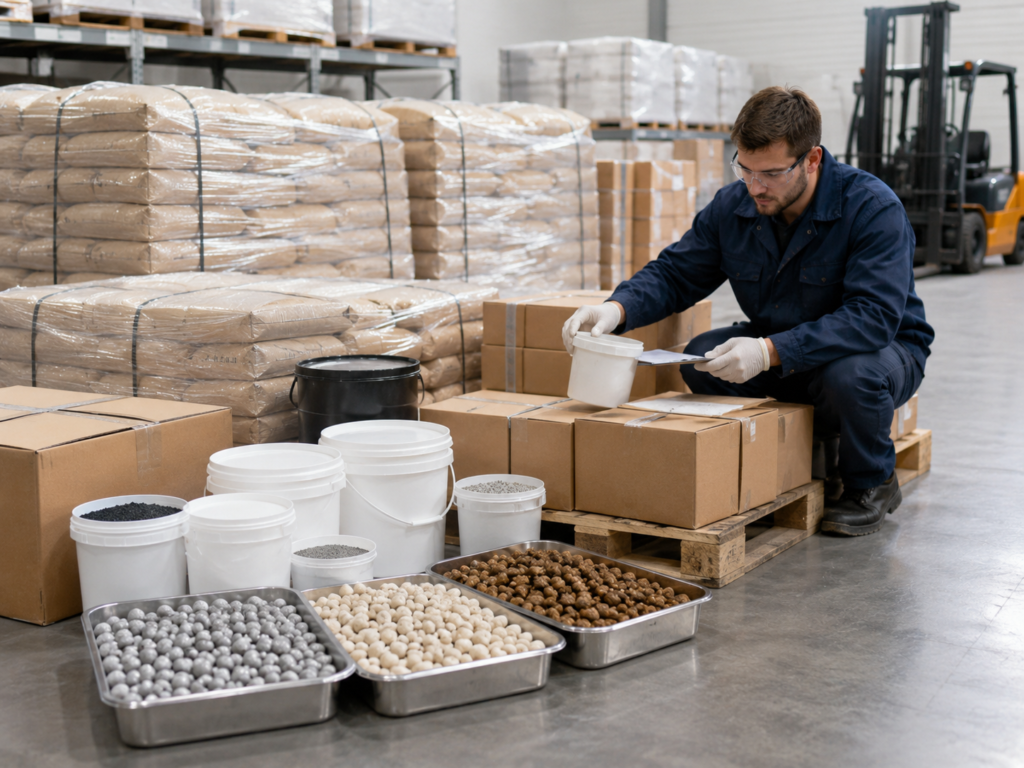
Bulk Supply & Export Packaging
Main Focus
Reliable supply for industrial production and international shipping.
Supply Support
- Trial sample order support
- Bulk tumbling media supply
- Mixed media and compound shipment
- Bag, carton, drum and pallet packaging
- Neutral packaging or customized label options
- Export packing for sea freight and air freight
Why It Matters
Industrial customers need more than small sample packs. They need stable bulk supply, safe packaging, clear labeling and repeatable reordering. We support customers from first test order to long-term production supply.
Best For
Factories, distributors, wholesalers, machine users and customers who need regular media and compound replenishment.
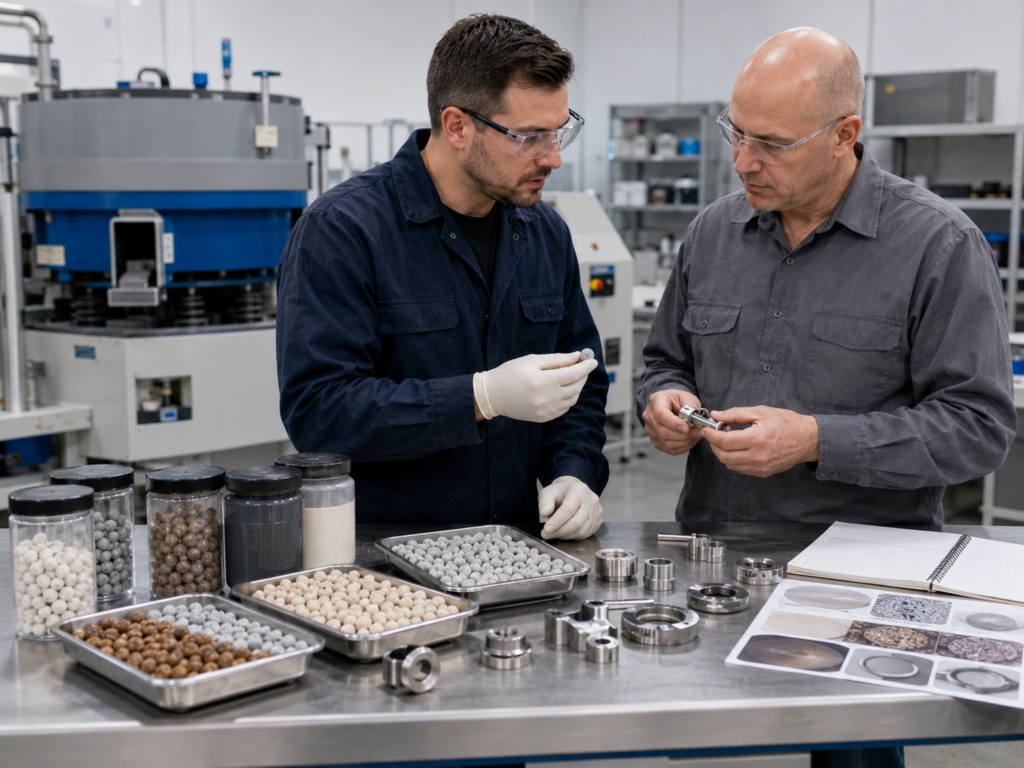
Long-Term Process Support
Main Focus
Help customers keep stable finishing results after the first order.
Support Includes
- Media consumption review
- Compound dosage suggestion
- Reorder recommendation based on machine capacity
- Troubleshooting for scratches, rust, poor brightness or media lodging
- Support for machine, media and compound process adjustment
Why It Matters
Tumbling media and finishing compound are long-term consumables. When customers reorder, they need stable performance and technical support, not just another shipment. ShinyStar Machinery helps customers maintain a repeatable finishing process over time.
Best For
Customers who run vibratory finishing machines, centrifugal disc machines, barrel tumblers, magnetic polishers or complete mass finishing lines.
Need a Stable Tumbling Media Manufacturer for Long-Term Production?
Get the Right Tumbling Media&Compound in 3 Steps
Choosing the right tumbling media, compound depends on your parts, material, burr condition, required surface finish, and machine configuration.
We help you confirm the right solution before production, so you can reduce risk and get a reliable finishing result.
Step 1: Confirm Requirements & Quotation
Send us your part photos, material, size, finishing goal, production capacity, and special machine requirements.
We will recommend the suitable:
- Vibratory finishing machine model
- Tumbling media
- Finishing compound
- Optional accessories
- Processing solution
- Quotation and lead time
Step 2: Free Sample Testing
You can send your parts to us for free sample testing before placing the order.
We will test the deburring, polishing, cleaning, or surface finishing result with suitable media, compound, and process time.
After testing, we will send you:
- Testing videos
- Before and after photos
- Recommended process
- Updated solution, if needed
Step 3: Production, QC & Shipment
After the solution and quotation are confirmed, we start production.
Lead time is 7-10 days.
Before shipment, we check the machine structure, motor, vibration stability, PU lining, control panel, voltage, separator, dryer, trial running result, and export packing.
We also provide operation guidance, spare parts support, shipping documents, and after-sales technical support.
Share your part material, size, burr problem, required finish, and batch quantity. We will review your requirements and guide you through machine selection, sample testing, quotation, and delivery.
FAQ About Tumbling Media and Finishing Compounds
Choosing the right tumbling media is not only about material or shape. The best result depends on your part material, burr condition, hole structure, target surface finish, machine type and finishing compound. ShinyStar Machinery helps you select the right media, compound and process based on your real parts.
1. What is tumbling media used for?
Tumbling media is used in mass finishing machines to remove burrs, smooth sharp edges, clean surface oxidation, improve surface roughness and create a more consistent finish on metal or plastic parts.
Different types of tumbling media produce different results. Ceramic tumbling media is usually used for stronger cutting and deburring. Plastic tumbling media is better for softer metals and surface smoothing. Steel tumbling media is mainly used for burnishing and bright finishing. Porcelain media, walnut shell and corn cob media are often used for fine polishing, dry polishing or delicate part finishing.
At ShinyStar Machinery, we do not only supply tumbling media as a standard consumable. We help customers choose the right finishing media according to part material, burr level, machine type, compound and target finish.
2. How do I choose the right tumbling media for my parts?
The right tumbling media should be selected based on several factors, not only price or material. Before recommending media, we usually need to understand your part material, part size, hole structure, burr size, surface requirement, current machine type and production capacity.
For example, hard metals such as stainless steel or carbon steel often need ceramic tumbling media for deburring and edge rounding. Softer metals such as aluminum, brass, copper and zinc usually need plastic tumbling media to reduce impact marks and surface scratches. If your goal is bright finishing instead of heavy cutting, steel media, porcelain media or polishing media may be more suitable.
The finishing compound is also important. The same media can create different results when used with different grinding compound, cleaning compound, polishing compound or rust inhibitor.
3. What is the difference between ceramic tumbling media and plastic tumbling media?
Ceramic tumbling media has stronger cutting force and is commonly used for heavy deburring, edge radiusing, rust removal, descaling and surface smoothing. It is suitable for hard metals such as steel, stainless steel, titanium, iron and cast parts.
Plastic tumbling media is lighter and gentler. It is more suitable for aluminum, brass, copper, zinc alloy, magnesium, plastic and rubber parts. It helps reduce part damage, impact marks and deep scratches, especially when the customer needs surface smoothing before anodizing, plating or painting.
In simple terms:
- Ceramic tumbling media: stronger cutting, better for hard burrs
- Plastic tumbling media: gentler finishing, better for soft metals
- Both need the right compound: grinding, cleaning or polishing compound can change the final result
If you are not sure whether ceramic media or plastic media is better for your application, ShinyStar Machinery can test your parts and recommend the right solution.
4. Which tumbling media is best for aluminum parts?
For most aluminum parts, plastic tumbling media is often the first choice because it is lighter than ceramic media and reduces the risk of part damage, surface dents and deep scratches. It is commonly used for aluminum CNC parts, die-cast aluminum parts, machined aluminum components and parts that need pre-anodizing or pre-painting surface preparation.
However, the final choice depends on the burr condition. If the aluminum part has heavy burrs or casting flash, a stronger ceramic media or a multi-step process may be needed first. After deburring, plastic media or polishing compound can be used to improve the surface finish.
For aluminum finishing, we usually consider:
- Burr size and edge sharpness
- Surface scratch tolerance
- Hole and slot structure
- Target finish before anodizing, plating or coating
- Machine type and processing time
- Cleaning or polishing compound selection
5. Which media should I use for stainless steel deburring and polishing?
For stainless steel parts, the media depends on whether the goal is deburring, smoothing or bright polishing.
For burr removal and edge rounding, ceramic tumbling media is commonly used because stainless steel usually requires stronger cutting force. For bright finishing or burnishing, steel tumbling media, stainless steel media, porcelain media or polishing media may be more suitable. If the parts need a clean and bright surface after wet finishing, polishing compound and rust inhibitor may also be required.
A typical stainless steel finishing process may include:
- Ceramic media for deburring
- Cleaning compound for oil and residue removal
- Polishing media or steel media for bright finishing
- Rust inhibitor or proper drying to reduce corrosion risk
ShinyStar Machinery can recommend the process based on your stainless steel grade, part shape, burr level and required surface finish.
6. Do I need finishing compound when using tumbling media?
Yes, in most wet finishing processes, finishing compound is very important. Tumbling media provides mechanical contact and cutting action, while compound helps control the chemical and process environment.
A suitable finishing compound can help:
- Improve deburring stability
- Clean oil, dust and machining residue
- Reduce surface stains
- Improve polishing brightness
- Control foam during processing
- Reduce rust risk after wet tumbling
- Improve batch-to-batch consistency
For example, grinding compound is used with ceramic or plastic media to support deburring. Cleaning compound helps remove oil and residue. Polishing compound improves brightness. Rust inhibitor protects steel or iron parts after wet finishing. Polishing paste is usually used with walnut shell or corn cob media for dry polishing.
Without the right compound, the same tumbling media may produce poor cleaning, dull surface, rust marks or inconsistent results.
7. What types of finishing compounds do you supply?
ShinyStar Machinery can supply different types of finishing compounds for mass finishing, vibratory finishing, barrel tumbling and polishing processes.
Common compound types include:
- Grinding Compound
Used for wet deburring, cutting support and process stability. - Cleaning Compound
Used to remove oil, dust, machining fluid and surface contamination. - Polishing / Brightening Compound
Used to improve surface brightness on aluminum, brass, copper, stainless steel and other metal parts. - Rust Inhibitor
Used after wet tumbling to reduce rust risk on iron, carbon steel and some stainless steel parts. - Foam Control Compound
Used to control excessive foam and stabilize the finishing process. - Polishing Paste
Used with walnut shell, corn cob or other dry polishing media for final bright finishing.
The best compound should be selected together with the tumbling media, machine type, water condition and target finish.
8. How can I prevent tumbling media from getting stuck in holes or slots?
Media lodging is a common problem when the tumbling media size or shape is not matched to the part geometry. It often happens with holes, threaded holes, blind holes, slots, grooves and complex die-cast parts.
To reduce media lodging, we usually check:
- Hole diameter and depth
- Slot width and shape
- Part drawing or photos
- Media size and shape
- Media separation method
- Whether special shape media is needed
In many cases, choosing the right media shape is more important than choosing the media material. Triangle, cone, angle-cut cylinder, pyramid, ball, pin or nipple-shape media can produce very different results.
For parts with deep holes or narrow slots, special plastic media or smaller precision media may help, but the risk of lodging must be tested before bulk production. That is why sample testing is highly recommended before ordering large quantities of tumbling media.
9. How do I prevent parts from rusting after wet tumbling?
Rust after wet tumbling can be caused by wrong compound selection, poor rinsing, long exposure to water, incorrect drying or no rust inhibitor after finishing. This is especially important for carbon steel, iron parts and some stainless steel applications.
To reduce rust risk, the process may need:
- Proper cleaning compound
- Suitable rust inhibitor
- Controlled water quality
- Correct compound concentration
- Fast drying after wet finishing
- Vibratory dryer or centrifugal dryer if needed
- Proper packing after finishing
Rust prevention is not solved by tumbling media alone. It should be considered as part of the complete media + compound + drying process.
ShinyStar Machinery can recommend an anti-rust process according to your material, machine type and storage requirements.
10. Can one tumbling media solve deburring, polishing and cleaning at the same time?
Sometimes one media can handle multiple finishing goals, but in many industrial applications, a single media cannot achieve the best result for every step.
For example, ceramic media may remove burrs effectively, but it may not create the final brightness the customer wants. Plastic media may improve surface smoothness, but it may not be strong enough for heavy burrs. Steel media can create a bright burnished finish, but it is not mainly used for heavy cutting.
A better solution may be a step-by-step process:
- Step 1: Deburring with ceramic or plastic media
- Step 2: Cleaning with suitable cleaning compound
- Step 3: Polishing or burnishing with polishing media or steel media
- Step 4: Rust prevention or drying if needed
This is why ShinyStar Machinery focuses on process solutions, not only product supply. We help customers match tumbling media, finishing compound and machine settings to achieve stable results.
11. What information should I provide before asking for a media recommendation?
To recommend the right tumbling media and finishing compound, please send as much information as possible about your parts and finishing goal.
Useful information includes:
- Part material
- Part size and weight
- Part photos or drawings
- Hole size, slot size or special structure
- Burr size and burr position
- Current surface condition
- Target finish after processing
- Current machine type and capacity
- Wet or dry process requirement
- Daily production volume
- Current media or compound problems
- Required packaging or bulk quantity
With this information, ShinyStar Machinery can recommend a more accurate media, compound and process solution instead of giving a general product suggestion.
12. Can you test our parts before we buy tumbling media?
Yes. Sample testing is one of the most important steps before bulk tumbling media supply, especially when the part has strict surface requirements, complex holes, soft materials or high-value precision surfaces.
Our sample testing process usually includes:
- Reviewing your part material and finishing target
- Selecting possible media and compound combinations
- Testing processing time, water level and compound dosage
- Checking burr removal, surface smoothness and brightness
- Evaluating media lodging or part damage risk
- Providing before and after photos or process suggestions
This helps reduce purchasing risk. Instead of guessing which ceramic tumbling media, plastic media, steel media or compound to buy, you can confirm the finishing effect before bulk order.
13. Can tumbling media be customized by shape, size or cutting grade?
Yes. Tumbling media can be selected or customized by material, shape, size, density and cutting grade. The purpose is to match different part geometries and finishing goals.
Common options include:
- Triangle media
- Cylinder media
- Angle-cut cylinder media
- Cone media
- Pyramid media
- Ball media
- Pin media
- Diagonal media
- Nipple-shape media
- Fast cutting media
- Medium cutting media
- Light cutting media
- Fine polishing media
The right size is very important. Smaller media can reach tight areas, but may get stuck in holes. Larger media is easier to separate, but may not reach small corners. Stronger cutting media removes burrs faster, but may increase the risk of scratches or material removal.
ShinyStar Machinery can help select or customize tumbling media according to your drawing, sample part and target finish.
14. What packaging is available for bulk tumbling media and compound?
For bulk tumbling media supply, packaging can be arranged according to product type, shipping method and customer requirements.
Common options include:
- Bags for ceramic tumbling media
- Bags or cartons for plastic tumbling media
- Cartons or drums for steel media
- Sealed packaging for polishing media
- Bottles, drums or containers for finishing compound
- Pallet packing for sea shipment
- Neutral packaging or customized labels if needed
For repeat orders, we can also help customers estimate media consumption based on machine capacity, daily working hours and media wear condition. This is useful for factories that need stable production and regular media replenishment.
15. Can you supply both tumbling media and vibratory finishing machines?
Yes. ShinyStar Machinery can supply tumbling media, finishing compound and vibratory finishing machines as a complete mass finishing solution.
This is important because media performance depends heavily on the machine and process. The same ceramic media or plastic media may produce different results in a vibratory finishing machine, centrifugal disc machine, rotary barrel tumbler or magnetic polishing machine.
We can help customers match:
- Machine type
- Media material
- Media shape and size
- Finishing compound
- Processing time
- Loading ratio
- Separation method
- Drying process
- Final surface requirement
This helps customers avoid common problems such as poor deburring, media lodging, scratches, dull finish, rust after wet finishing or unstable batch results.
16. Why should we choose ShinyStar Machinery as a tumbling media manufacturer?
ShinyStar Machinery is not only a tumbling media manufacturer. We provide complete media, compound and process selection support for industrial surface finishing.
Customers choose us because we can help with:
- Ceramic tumbling media selection
- Plastic tumbling media selection
- Steel and polishing media recommendation
- Finishing compound matching
- Rust inhibitor and cleaning process support
- Free sample testing
- Media lodging risk analysis
- Machine + media + compound process planning
- Bulk supply and reorder support
Our goal is not only to sell media, but to help your parts achieve better deburring, polishing, cleaning, rust prevention and surface consistency.
Not Sure Which Tumbling Media to Choose?
Send Us Your Parts and Get a Finishing Solution
Tell us your part material, size, burr problem, and required finish. We will recommend the right vibratory finishing machine, tumbling media, finishing compound, and process for your application.
What You Will Get:
- Machine model recommendation
- Suitable tumbling media suggestion
- Finishing compound recommendation
- Estimated processing time
- Free sample testing option
- Quotation based on your real parts
Not sure which machine to choose? Send us your part photos. Our team will help you find a suitable deburring, polishing, or surface finishing solution.